Photo credit: RFI
Migration is increasingly essential to Portugal’s economy. Still, the mental health of many new arrivals to the country is affected by the trauma of what they have left behind, long and arduous journeys, and the racism that greets them, fuelled by far-right rhetoric. In addition, mental health treatment is often impeded by cultural and linguistic barriers.
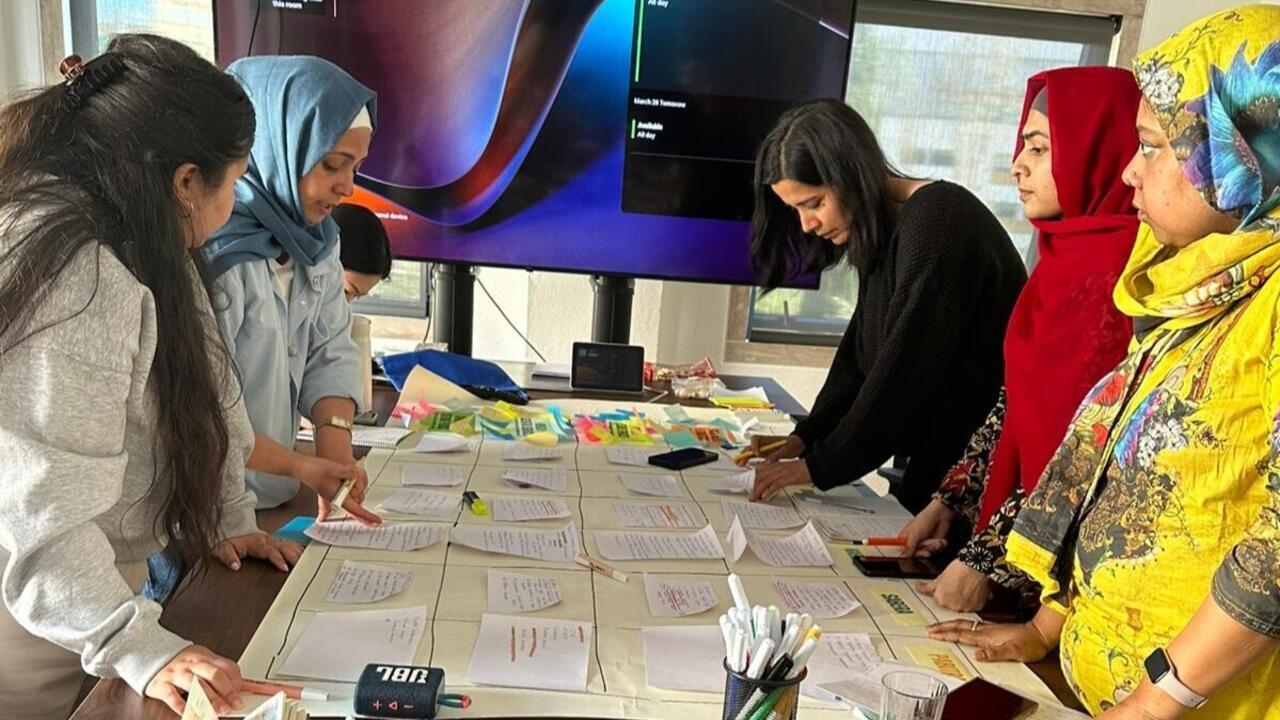
RFI reports that at the Ismaili Centre in Lisbon, a small team is prepping for the organization’s outreach work. They aim to gather information on the mental health and well-being of migrants, as part of a project called What Health.
Their plans include approaching migrant communities on the street, as well as utilizing diaspora festivals and events to distribute their questionnaires.
It is most often people from migrant backgrounds themselves who are driving outreach efforts like these – from Nepal, China, India, Bangladesh and Pakistan. Having qualified in their countries of origin, some as doctors, they aim to improve the living conditions of their peers by helping to collect data and raise awareness.
Funded in part by the European Union, What Health will carry out extensive research into the mental health of migrants until 2029.
After collecting personal accounts, the team of researchers work with doctors to identify gaps in the system, before training them in an approach that takes cultural factors into account.
Practitioners will then reach out to migrant communities to raise awareness of mental health issues and explain the care pathways available.
Since the late 1990s, Portugal has transformed from a country of emigrants to one of immigrants.
From the mid-2010s onwards, Syrian and Afghan refugees, workers from the Indian subcontinent and European pensioners began arriving – against a backdrop of an ageing population and a growing need for labour.
The presence of these new groups means services need to adapt, particularly in the field of mental health.
Many people are arriving in Portugal traumatized, either by conflicts that forced them to flee their homes or by the dehumanizing and often dangerous journey to safety.
The healthcare system has also had to adapt to the arrival of large numbers of non-Portuguese speakers, with Mario Ribeiro, a PhD student and coordinator of the Migrant Observatory, noting that this language barrier is the primary challenge.
Telephone interpreting services and intercultural mediators have been put in place, organized by the What Health project as well as organizations including the Portuguese Council for Refugees (CPR).
In Loures, the reception centre run by the CPR provides another gateway to healthcare, designed for people applying for refugee status.
Upon arrival, asylum seekers are provided with accommodation and support throughout the initial phase of their asylum application.
The CPR also has an arrangement with the Julio de Matos Psychiatric Hospital in Lisbon to ensure faster access to consultations for its service users.
Whilst those working on the ground are stepping up their efforts, the political and economic climate in Portugal is taking its toll on migrants’ mental health.
Since a 2025 reform came into force, people without proper documentation have had to pay more than 100 euros to go to the hospital- a sum beyond the means of many recent arrivals.
The rise of the far-right Chega party and the normalization of anti-immigration rhetoric in Portugal are also having an impact on mental health.