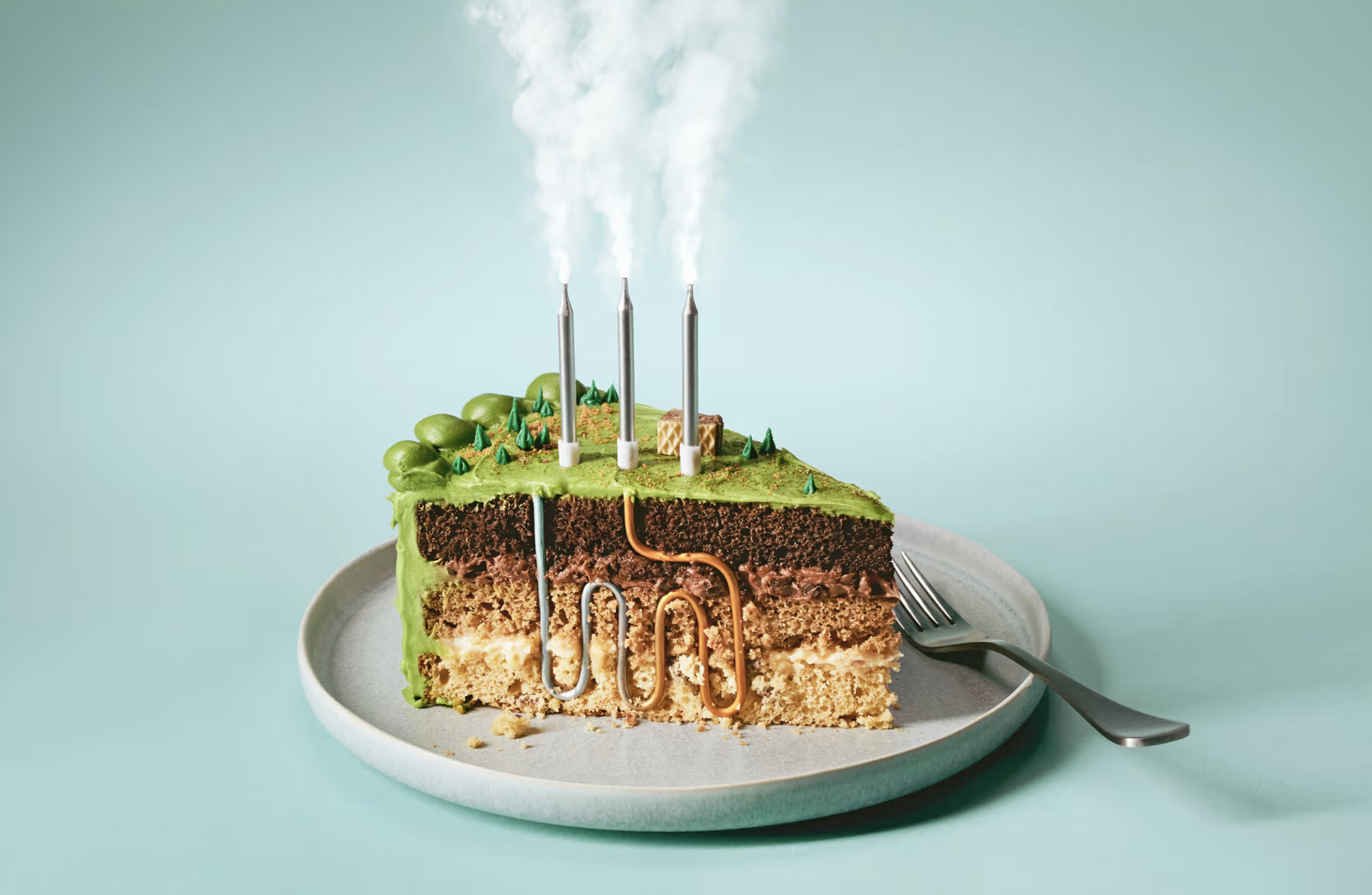
Photo credit: geothermal Canada
In 2017, Lisa Mueller, a mechanical engineer by training, visited an oil and gas field in Swan Hills, Alberta. Mueller, who had previously worked at Shell, had co-founded a startup focused on geothermal energy – generated from the Earth’s natural heat – and had been invited by a junior oil nd gas company to take a look at Swan Hills and assess the site’s potential.
Toronto Today reports that Mueller noticed it wasn’t just oil and gas coming up the pipes, but hot water from 2,400 metres below: the pipe was “very hot” to the touch, she says. This isn’t only an oil and gas facility, she thought. It also has the potential to be a geothermal facility.
That oil and gas company hired Mueller to develop the site. Now resident and CEO of another startup she co-founded, Calgary-based FutEra Power, she oversaw Swan Hills’ transformation into Canada’s first -and so far, only – geothermal power plant. It’s a hybrid geothermal-natural gas facility, meaning it combines natural gas combustion with geothermal energy to produce electricity. Running since 2023, it can send up to 21 megawatts to the grid. At its peak output, Mueller says, the plant could power 16,000 homes.
Using geothermal energy to generate electricity is a tantalizing prospect. Geothermal is renewable and, unlike wind and solar, it’s not intermittent, meaning it can provide stable baseload power. What’s more, it has a “small footprint,” Mueller says. “It can operate without a lot of water use. It’s close to no emissions.” What if geothermal power plants could be built almost anywhere and produce clean electricity?
Earth holds a mind-boggling amount of heat, produced by the breakdown of radioactive particles and leftover heat from our planet’s formation. The deeper you go, the hotter it gets: Earth’s core temperature rivals the surface of the sun, but there’s no need to drill all the way to the mantle to tap into its heat – if that were even possible with current technology, which it isn’t.
In fact, the amount of heat contained in just the top 10 kilometres of the Earth’s crust – the rocky outermost layer of our planet – could supply the world’s energy for 200 million years, according to geophysicist Rebecca Pearce, the science lead at the Utradeep Geothermal Program at the Cascade Institute, based at Royal Roads University.