Photo credit: BBC
The latest report by the International Organization for Migration and the United Nations High Commission for Refugees reveals a troubling pattern that has persisted for years.
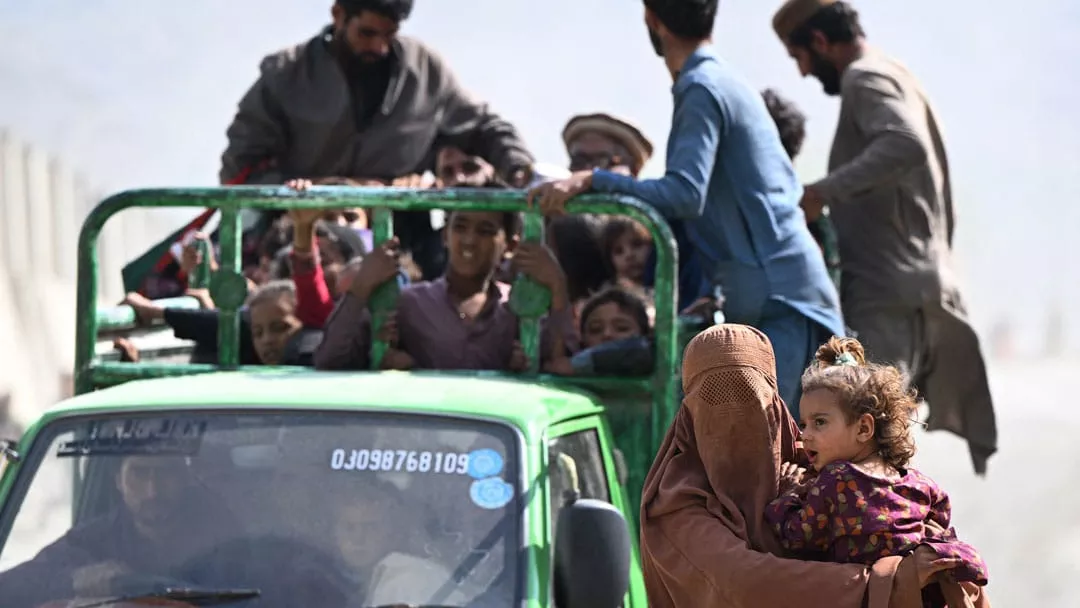
Kabul Times reports that Afghan migrants in Pakistan continue to face systematic pressure, arbitrary detention, and the politicization of their very existence. According to the report, 517 Afghan migrants were arrested and detained within one week, an alarming figure even if it reflects a 47% decrease compared with the previous period. More than half of these arrests occurred in Balochistan, with significant numbers also recorded in Punjab and Khyber Pakhtunkhwa provinces of the neighbouring country.
These weekly statistics are part of a much larger trend as since September 2023, nearly 2,744 million Afghan nationals have either returned voluntarily or been deported from Pakistan. Such mass movements of people inevitably strain Afghanistan’s humanitarian landscape, increasing the need for shelter, food, and long-term integration support. International organizations have repeatedly warned that the scale of returns far exceeds Afghanistan’s current capacity, especially as global humanitarian funding continues to decline.
Afghan migrants in Pakistan describe the conditions as violating basic human dignity. They report being denied rental housing, pushed out of neighbourhoods, and forced to live without shelter. They say that all their rights have been violated, and that the environment has become increasingly hostile. Others emphasize that the responsibility toward migrants is not the burden of one country alone but a shared legal and moral obligation of the international community. The crisis, they argue, is too large for any single state to resolve. These testimonies reflect a broader reality, as Pakistan has repeatedly politicized both migration and trade, using Afghan migrants as leverage in moments of political tension. Over the years, Afghan refugees have faced waves of pressure tied not to legal processes but to shifting political narratives. At various times, Afghan migrants have been portrayed as security risks, bargaining tools, or economic burdens, labels that ignore their decades-long contributions to Pakistan’s society and economy.
Despite these pressures, the Islamic Emirate of Afghanistan remains committed to its policy of non-interference and to preventing any form of interference from others. Afghan authorities consistently emphasize that they do not allow their soil to be used against any country and that they remain firm in their pledge to maintain constructive, respectful relations with all neighbours. This commitment stands in stark contrast to Pakistan’s recurring tendency to frame migration as a political instrument rather than a humanitarian issue.
The recent release of nearly 3,700 Afghan migrants from Pakistani prisons over the past year is a welcome development, yet it does not erase the broader pattern of mistreatment. Sustainable solutions require more than temporary releases or short-term relief. They demand a shift in policy, one that recognizes Afghan migrants as human beings deserving protection, not as variables in political calculations. The Islamic Emirate continues to uphold its responsibilities, and it is time for others to do the same.