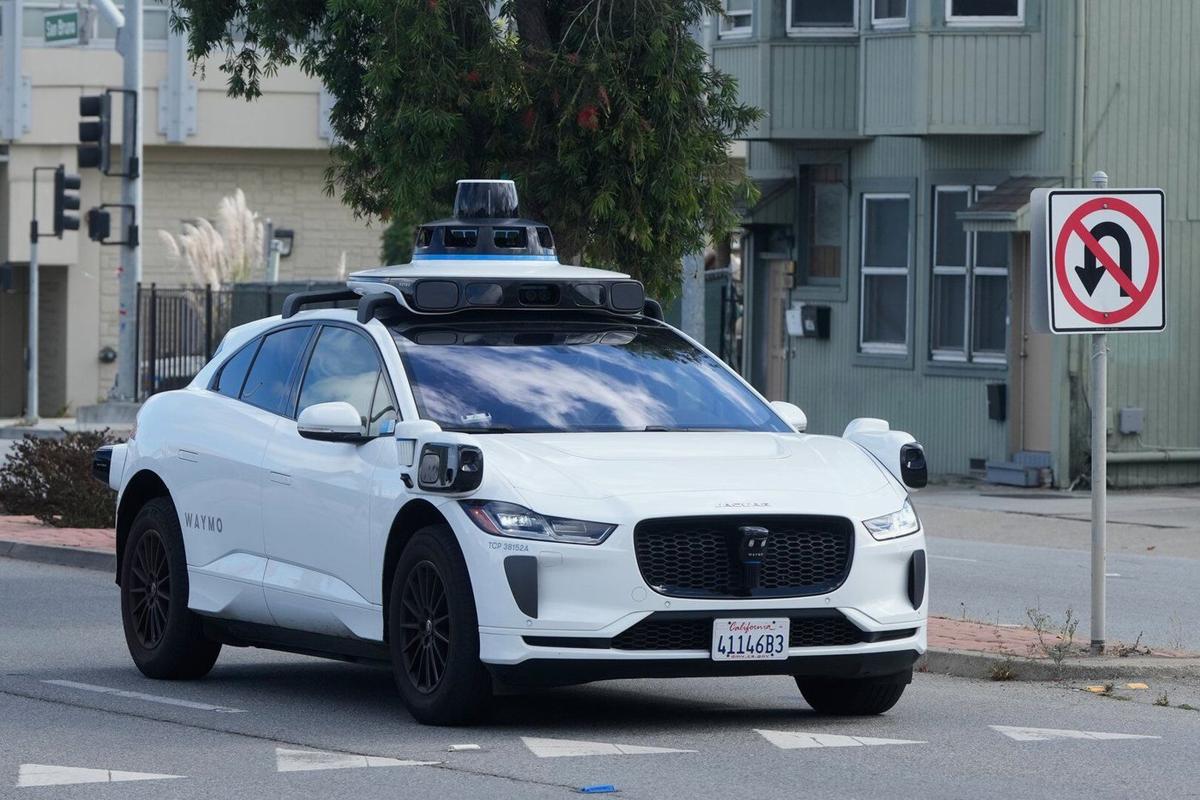
Photo credit: Toronto Star
Self-driving taxi operator Waymo is poised to launch a test phase in Toronto, with the goal of carrying its first passengers in 2028 as part of a push to breach the broader Canadian market.
The Canadian Press reports that the California-based ride-hailing company says the Ontario government has given it the green light to take part in a provincial pilot program that regulates testing of autonomous cars.
The move would give a jolt to the province’s auto tech sector, shake up the ride-hailing market and potentially boost accessibility for the sight-loss community, observers say, even as concerns persist around safety and job security.
Waymo, owned by Google parent company Alphabet Inc., says the first phase includes high-definition street mapping and data collection starting this year, to be followed by test runs of the robotaxis with a driver behind the wheel.
Waymo co-CEO Tekedra Mawakana sought to reassure skeptics who say autonomous vehicles struggle to handle more complicated environments, including bad weather, heavy traffic or unusual situations.
Waymo cars were involved in 95 per cent fewer crashes causing serious injury or death compared with humans in cities where the service operates, the tech firm said, citing internal data from more than 400 million fully autonomous kilometres driven.
Waymo’s arrival could prove an accelerant for a budding cluster of auto-oriented tech companies in Ontario, industry leaders say.
“This is a victory for some of the untold stories in mobility technology in Canada – the kinds of companies that don’t get the headlines but, in terms of investment value,…are just as material as the ones that bend metal and melt plastics,” said Flavio Volpe, president of the Automotive Parts Manufacturers’ Association.
While acknowledging that “They have more sensors, which makes the whole system more robust,” Sidney Givigi, a professor of robotics and machine learning at Queen’s University’s School of Computing, said harsh weather remains a real concern.
“All these sensors can get occluded by snow … which is something that they don’t have in California,” Givigi said. “What if there is ice on the road, or you have a very strong blizzard, and then you try to stop your car on a hill – and it does not stop?”
It could also represent a threat to companies with human hands at the wheel, or to the job security of drivers themselves.
Robotaxis also carry the potential to make urban travel more accessible for people who are blind or partially sighted.
Michelle McQuigge, CEO of Toronto-based non-profit Balance for Blind Adults, said it’s “remarkably common” for drivers to take off at the sight of a service animal, despite laws mandating their admission.
“I travel with a guide dog. I’m totally blind. And we get service denials at least once a month, I would say, if not more,” she said.