Photo credit: Toronto Today
The City Of Toronto has selected 19 projects to develop nearly 10,000 rental homes, with around 2,000 rent-controlled units.
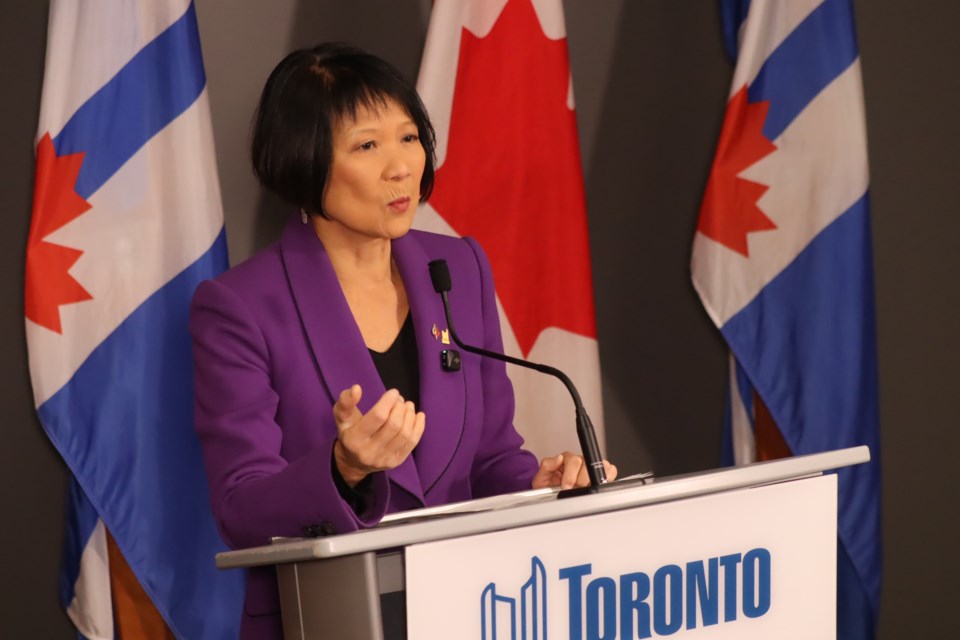
Toronto Today reports that Mayor Olivia Chow said in a Monday morning announcement that she is “delivering on her first re-election pledge to build homes through the second phase of the Purpose-Built Rental Housing Incentives stream, an existing program launched in 2024.
The second phase is promising to provide 9,667 new rental homes across 12 wards, with 2,059 of them rent-controlled.
Five of the projects are slated for downtown wards, including in Spadina-Fort York, University-Rosedale, Toronto-Centre and Parkdale-High Park. Those five projects are set to provide 3,277 homes, which accounts for 34 per cent of homes in the second phase’s selected projects.
The program promises developers financial breaks in exchange for new purpose-built rental housing with a minimum 20 percent affordable units, rent-controlled homes and construction starting within 12 months.
Through the program, eligible developers receive an indefinite deferral of development charges for market rental homes so long as they stay as rental properties, as well as a 15% property reduction for 35 years.
The city said in a news release that it received 58 applications for the second phase of the program after a callout for projects in August, which would have equalled around 27,000 rental homes.
City council recommended in June a ceiling of up to 10,000 homes. During the selection process for the second phase of the program, projects that could start construction quickly were prioritized.
Dave Wikes, president and CEO of the Building Industry and Land Development Association (BILD), said the 12-month construction start timeline is “aggressive” but entirely possible for applications that “are ready to go and have the financing in place.”
Toronto City Council approved the second phase of the program in June after Chow struck a $1.5 billion deal with the federal and provincial governments to cut housing construction costs.
The city says the funding will help pay for infrastructure that Toronto needs while also reducing development charges, but that it is waiting to finalize the transfer payment agreement with the province.