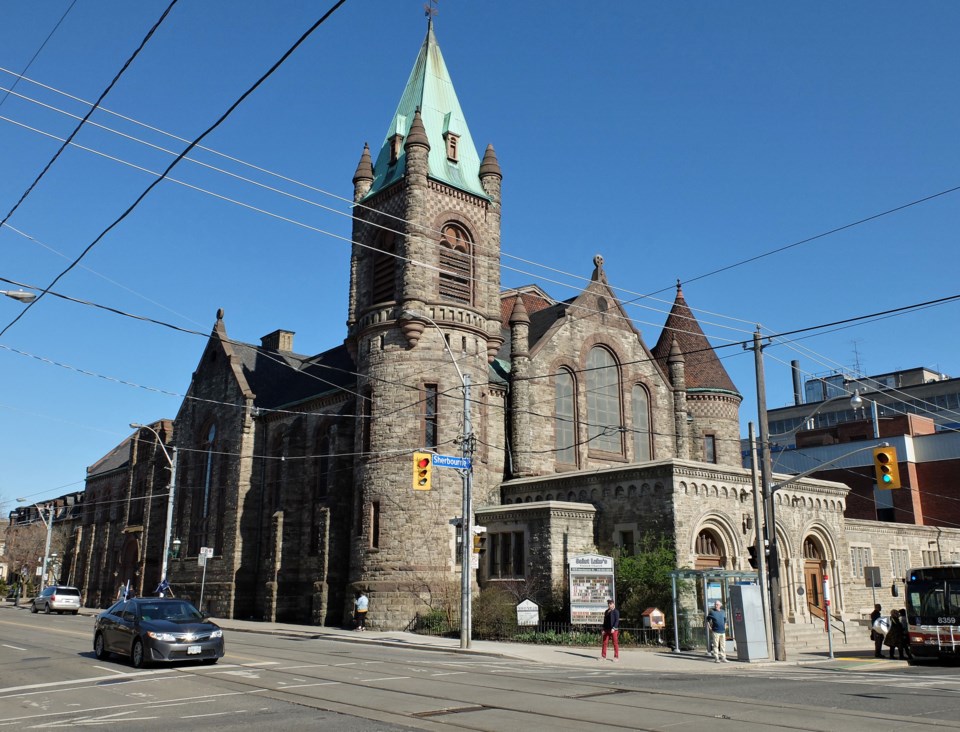
Photo credit: Global News
When a house of worship closes its doors, a sense of emptiness and melancholy can inflect the final services. By then, the congregation is often reduced to a greying trickle, easing into a quiet coda that follows a decades-long period of decline. For the Lutheran Church of the Criss, west of downtown Winnipeg, however, its last service in 2025 marked both an end and a beginning.
Toronto Today reports Heidi Geerrard, a property manager and longtime community member who stands at the cusp of the church’s next chapter, building affordable housing, as saying: “When we realized the church was going to be (put) to good use, it just felt like it wasn’t as sad.”
A similar reality is playing out in cities across Canada. According to the Canadian Urban Institute, nearly a third of the country’s faith buildings are projected to close by 2035. It’s a shift that’s rooted in both a demographic evolution and a broader secularization of civic life. Once largely dominated by Christian denominations, Canada’s increasingly multicultural population inclides a growing share of Muslim, Hindu and Sikh communities, all while Canadians with no religious affiliation comprised almost 35 per cent of the population in the 2021 census. It all translates into shrinking congregations, emptying churches – and surprisingly transformative opportunities to tackle the housing crisis.
The Lutheran Church of the Cross has a precedent of building homes. In 1977, the congregation’s nascent non-profit housing agency, Arms of the Cross, developed a nine-storey, 125-unit affordable apartment building just across the laneway from the parish itself.
“It was originally for older church members who didn’t have a home, but soon we opened it up to everyone,” says Gerrard, noting that bachelor rents currently start at $365 per month, substantially less than half of Winnipeg’s market average.
However, a lot has changed in the nearly half-century since the church launched Arms of the Cross, and the prospect of transforming the church into housing brought big questions: how to navigate a fragmented public financing and subsidy landscape, fast-changing land use and zoning policies and the preservation of underutilized faith properties – provided a pro bono feasibility assessment.
Similar projects are emerging across Canada. In Edmonton, for example, the municipality’s newly launched Faith Lands Affordable Housing Incentive has much in common with Shared Ground. The $2-million fund offers places of worship across the city up to $135,000 to cover pre-construction fees for services including feasibility studies, environmental assessments, community consultation, design consultancy and permitting.
Meanwhile, the United Church of Canada has spun Kindred Works out of its real estate arm, kickstarted with a $20 million CMHC line of credit. On average, a United Church congregation shuts its doors for good once a week; properties earmarked for intensification range from a 48-storey tower springing from the preserved shell of Saint Luke’s United Church in downtown Toronto to a low-rise townhouse and apartment complex on the grounds of Portland United Church in Saint John, New Brunswick. Kindred Works aims to house some 34,000 people by 2037 through this growing property portfolio.
These initiatives are not without critics. Kindred Works has been criticized for its opaque organization structure: writing in Broadview, a magazine covering the United Church of Canada, journalist Muke Milne argues that a lack of publicly available information is “making it difficult to evaluate how money is being used.” And in general, incentive programs have been criticized by some urban planners as temporary work-arounds that mask deeper problems of excessively restrictive zoning permissions and overly costly, byzantine permitting.
While churches across Canada continuously changed with the times, past shifts pale in comparison to the secularization of Canadian life. Amid a deepening urban housing crisis, the key land that churches occupy presents a transformational opportunity to serve their communities by building homes. For congregations across the country, it is a new answer to the foundational question of what it means to be a good neighbour.