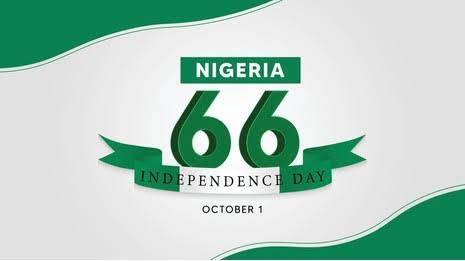
Nigeria is 66 years old today. themigrant.online has decided to do a 12-day series for the country.
Opening Frame
Nigeria stands today in a long, unbroken season of serial betrayals – betrayals of vision, of trust, of institutions, of citizenship, and of the future itself.
As someone who is only about three years younger than Nigeria itself, and someone who has relatively enjoyed the so-called “better days” in Nigeria, the future matters deeply to me.
These betrayals are not isolated events. They form a pattern, a political climate, a civic atmosphere. They define how power is used, how citizens respond, and how the nation imagines its destiny.
This chapter isn’t about lamentation. It’s about diagnosis – the clear-eyed recognition that a republic cannot heal until it names the wounds that keep reopening.
1) Betrayal of The Founding Promise
Nigeria’s independence carried a promise: that a diverse people could build a shared future. That promise was broken almost immediately.
X The census crisis that fractured trust.
X The Western Region crisis shattered political stability.
X The 1966 coups destroyed the illusion of elite unity.
X The civil war exposed the fragility of national identity.
These were not accidents. They were betrayals of the idea that Nigeria could be governed as a collective project rather than a competitive marketplace.
The founding betrayal was simple:
The elite chose power over nationhood.
2) Betrayal of Citizenship
Citizens were promised security, justice, opportunity, and dignity.
The Nigerian state became a machine that extracts from citizens without protecting them.
It taxes without delivering.
It arrests without securing.
It demands loyalty without earning trust.
This is the betrayal that shapes everyday life:
The state abandoned its duty to the people.
3) Betrayal of Institutions
Institutions meant to protect the republic were hollowed out from within.
X Police became extortion units
X Courts became bargaining tables.
X Civil service became patronage networks.
X Refineries became monuments of decay.
Nigeria’s institutions did not collapse – they were betrayed by those entrusted to guard them.
The guardians became saboteurs.
4) Betrayal of the Economy
Nigeria inherited extraordinary wealth – oil, land, minerals, human capital.
But instead of building refineries, industries, railways, and manufacturing facilities, the elite built:
X import cartels
X subsidy mafias
X rent networks
X extractive partnerships5) Betyal
X dependency systems
The nation’s wealth was traded for elite convenience.
5) Betrayal of the Citizen’s Mind
Perhaps the deepest betrayal is cultural
Citizens were taught:
X tribe over nation
X survival over citizenship
X silence over accountability
X loyalty over merit
X fear over participation
The political class did not just misgovern –
they miseducated society.
This betrayal ensures that even when leaders change, the system remains the same.
6) Betrayal of the Future
Every generation of Nigerian leadership has left the country worse than they met it:
X poorer
X more divided
X more insecure
X more dependent
X more cynical
The future is repeatedly mortgaged to pay for the present comfort of the elite.
Nigeria’s unborn generations are being betrayed before they arrive.
7) Betrayal of Hope
Hope is Nigeria’s most abundant resource – and its most exploited.
Political slogans become anaesthesia:
X “Change”
X “Next Level”
X “Renewed Hope”
X “Transformation”:
Hope becomes a tool to reset the cycle of betrayal, not to break it.
Hope is weaponized, not honoured.
8) Betrayal of the Diaspora
Nigeria’s diaspora is one of the most capable in the world.
Yet the country:
X blocks their political participation
X wastes their expertise
X discourages their return
X treats them as cash machines
Nigeria exports brilliance and imports mediocrity
The homeland betrays the diaspora it still loves.
10) Why the Season Continues
Because betrayal is:
X profitable
X Low-risk
X socially tolerated
X politically rewarded
X institutionally protected
And because citizenship is:
X weak
X fragmented
X uninformed
X unorganized
X unempowered
Nigeria is not in a season of betrayals by accident.
It is in a season of betrayals by design.
11) The Civic Renaissance: The Only Exit
A season of serial betrayals ends only when:
X citizens become discerning
X institutions become stronger than individuals
X accountability becomes cultural
X national identity becomes stronger than tribal identity
X leadership becomes merit-based
X the republic becomes sacred
This is the civic renaissance – the antidote to betrayal.
It is not a movement.
It is not a protest.
It is not an election.
It is a re-engineering of Nigerian citizenship.
Closing Charge: The Migrant as Witness and Architect
themigrant.online exists because migration is not escape – it is perspective.
The migrant sees Nigeria from the outside and the inside at once.
The migrant understands what strong institutions look like.
The migrant knows what citizenship feels like.
The migrant carries the memory of what Nigeria could be.