From the dusty, bustling markets of Accra to the busy streets of Hong Kong, the ubiquitous red-white-and-blue, chequered stripes of the “Ghana-Must-Go” bag have crossed borders and generations.
Malay Mail reports that an everyday utility used to carry anything from clothes and household goods to food, the bag also carries painful memories of mass expulsion and displacement.
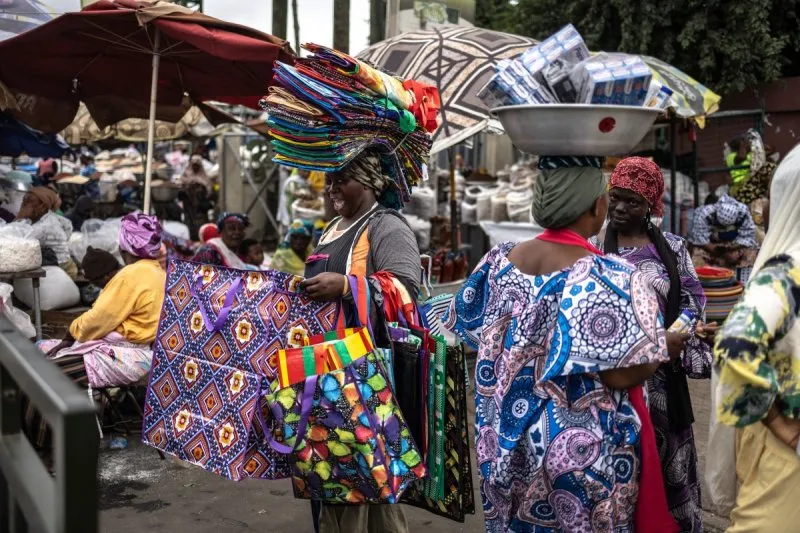
“Ghana Must Go is here, come and buy.
“It’s good, it’s good,” Agnes Ambomah called out in a rhythmic sales pitch from her roadside stall in the Ghanaian capital.
“This red one is very good quality.
“This one is original,” she said, lifting one for a customer.
At the age of 38, she is too young to remember the events that gave the bag its dark name.
But for 70-year-old Bashiru Tahiru, the sight of the bag brings back memories he would rather forget.
“It’s a bad luck bag.
“I don’t use it,” Tahiru told AFP from his clothing shop in Accra’s sprawling Makola market. Tahiru was among the roughly one million Ghanaians forced to leave Nigeria during a government-ordered expulsion of undocumented migrants in the early 1980s.
Working as a port labourer in Lagos, he remembers packing his belongings into one of the striped bags as he prepared to leave.
He was afraid to be seen carrying it on the streets as it had already become a marker of migrants that the nation had suddenly turned against.
Decades later, the anti-migrant tensions that flared up in South Africa this year – including against Ghanaians in the country – brought those memories back.
“It reminds me of the kind of suffer I suffered in Nigeria,” he told AFP in pidgin English.
Sporting a black-and-white chequered shirt and a black skullcap, Tahiru recalled leaving Nigeria aboard one of several cargo evacuation ships organized by the Ghanaian government.
This time, Ghana and Nigeria were allies, leading a diplomatic charge against Pretoria and organizing flights to evacuate their nationals.
The unrest sparked debates on social media about the symbolism of the bag.
Some South Africans said that the Ghana Must Go bag’s origins were a reminder that every nation – Nigeria then, South Africa now – has the right to say “enough was enough”.
The iconic bags were not spotted among those returning to Ghana and Nigeria, as some carriers, such as Ethiopian Airlines have “prohibited” checking them in, unless secured in a hardcover container, citing frequent damage to airport conveyor belts.
The chequered strips were seen however being hauled by road as immigrants fled South Africa to Malawi, Zimbabwe and Mozambique.
The bag’s history stretches back to Hong Kong in the 1960s during the city’s economic boom.
Craftsman Lee Wah, founder of Wah Ngai Canvas, is widely credited for transforming the material, which was sourced from Taiwan and Japan, into durable, waterproof bags.
As China gradually opened up in the 1970s, thousands of Hong Kong residents used them to carry goods when visiting mainland relatives.
The bags are still hailed as embodying the city’s resilience, although mass production has moved to mainland China.
“The Hong Kong spirit is an indomitable spirit …
“It means that no matter how hard life gets, you can still see it through,” Lee’s son, who took over the family business but shies away from the limelight, told AFP.
In West Africa, the bag – once associated with humiliation of expulsion and poverty – has over the years become an indispensable staple.
“It has become a utility bag,” said University of Ghana historian Kweku Darko Ankrah.
“The negative connotation attached to migration is no longer there.”
Artists and designers have also grown fond of the material.
Ghanaian artist Abdur Rahman Muhammad, 38, paints portraits using the bag’s pattern as a recurring background motif.
In 2007, a luxury fashion house Louis Vuitton released its own spin on the bag, leading to accusations of cultural appropriation and insensitivity to its connection to mass expulsions.
But it also showed “how the bag has now transformed from poor status to the middle level, and even to the elite status,” according to Anktah.
The bag is also popular among migrant domestic workers in Hong Kong – one of the finance hub’s largest migrant workforce communities.
Every Sunday, their weekly day off, Jenalyn Polinar and her Filipino compatriots gather on Hong Kong’s streets to pack the bags with shoes, clothes, noodles and toiletries to be shipped to their home villages.