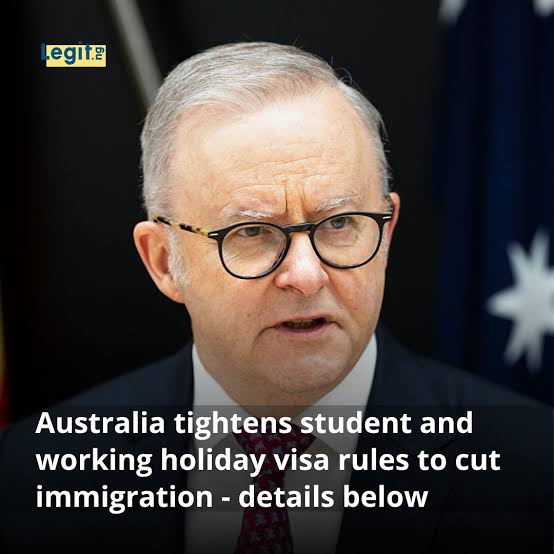
Labur has unveiled a sweeping overhaul of Australia’s migration system that will restrict international students from bringing family members, slash access to extended working holiday visas and make it harder for temporary migrants to remain in the country by repeatedly switching visas.
The Daily Mail reports that the changes will also target students who switch courses to prolong their stay, tighten visitor visa rules, crack down on dubious protection claims, and increase enforcement against people who overstay their visas.
The overhaul will prioritise migrants with skills Australia needs, with tradies receiving the same points as university graduates under the new system.
Visa applications from workers in priority sectors will also be fast-tracked, including healthcare, construction, education, law enforcement, defence, resources, agriculture, aquaculture and fishing.
Home Affairs Minister Tony Burke announced the measures at the National Press Club on Thursday, warning that cutting migration too deeply could damage the economy.
He said the government wanted a clearer distinction between temporary and permanent migration.
Under one of the biggest changes, international students and graduate visa holders will no longer automatically be able to bring family members with them.
The changes will not affect partners or family members who are already in Australia on an existing visa.
Working holiday-makers will also face tougher rules when seeking to remain in Australia for a second or third year, because of the Australia-UK free trade agreement.
Backpackers will no longer automatically receive another working holiday visa even if they complete the required regional work. Instead, eligible applicants will enter a balllot.
The number of second-year visas will be capped at 45,000 places available, compared with about 57,000 people who qualified last year.
The cut will be much sharper for third-year visas, with just 5,000 places available, compared with about 31,000 people who qualified last year.