Photo credit: Reuters
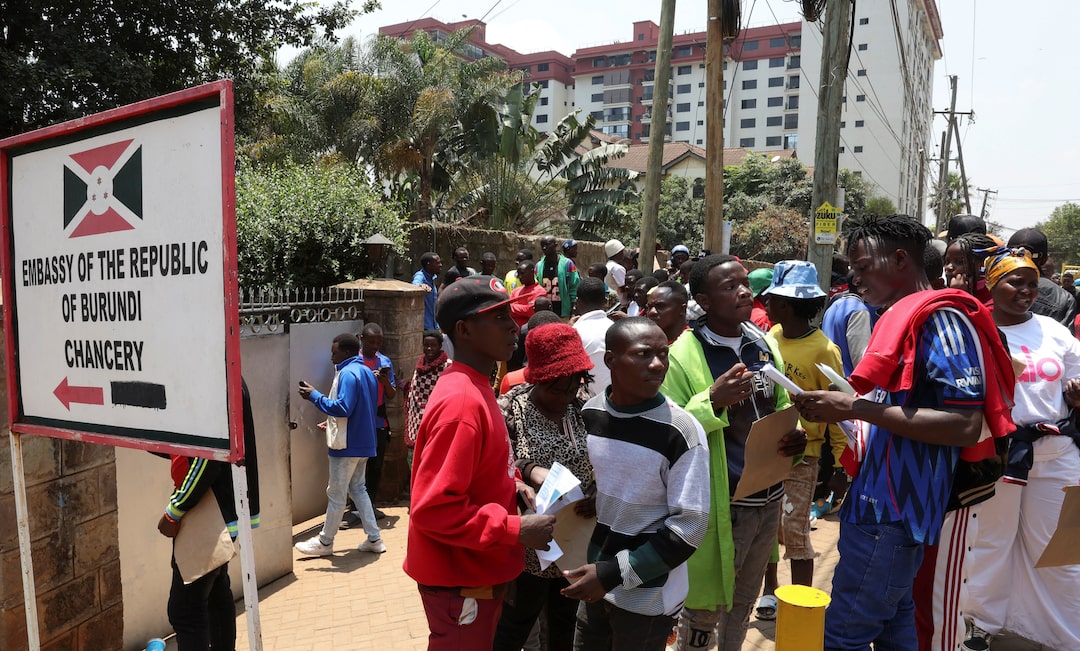
Kenya’s government offered a temporary amnesty to undocumented East African nationals after hundreds of Burundians flocked to their country’s embassy in Nairobi on Monday seeking travel documents, fearing a crackdown on small-scale traders from abroad.
Reuters reports that Kenyan President William Ruto last week called on authorities to close down all small-scale businesses operated by foreign traders, starting on Monday, following a meeting with Kenyan traders who had been protesting against tax reforms.
The order, which Kenya’s trade ministry said applied to foreigners operating without work permits, sparked chaos outside Burundi’s embassy on Monday, with some Burundians saying they had been threatened by neighbours since Ruro’s remarks.
There were no signs of a crackdown in Nairobi on Monday, and a spokesperson for Ruto’s administration later said the government had a policy of “absolute zero tolerance toward any form of harassment, intimidation or xenophobia”, and urged undocumented nationals from other East African countries, and specifically from Burundi, to formally register at their embassies.
“For the duration of this designated registration period, all individuals undergoing registration will be presumed legally present in the Republic of Kenya. This window is designed to bring our brothers and sisters out of the shadows, ensuring they can access health, banking. and legal protection without fear,” the spokesperson said in a statement.
There are about 16,000 Burundian refugees and asylum seekers in Kenya, according to the UN refugee agency. Many work in small-scale businesses in Nairobi, selling items such as coffee and used clothes.
Clutching suitcases and assorted possessions, crowds of mostly young men formed long queues outside Burundi’s embassy in Nairobi on Monday morning.
Bufrundi’s ambassador to Kenya was not immediately available for comment. Burundi’s Foreign Affairs Minister Edouard Bizimana did not immediately respond to a message and a call for comment.
Ruto’s critics have accused him of blaming Kenya’s economic difficulties on foreigners as he looks ro an election next year, when he is due to stand for a second term.