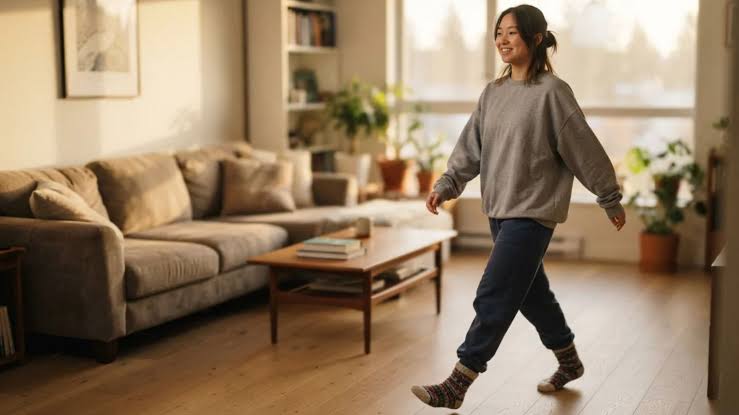
Walking around the house can count as physical activity when it helps reduce the time you spend sitting. However, defining this movements as exercise depends on the level of effort, structure, and progression involved in your walking.
Walking can qualify as exercise based on its purpose and structure, regardless of whether it occurs indoors or not. Walking around the house counts as exercise when it is done as a planned, structured, and repetitive activity intended to improve or maintain physical fitness.
All walking counts as physical activity because it requires energy. However, walking between rooms during everyday household activities or moving from one part of your home to another is generally classified as incidental physical activity rather than structured exercise.
Walking around the house for exercise can deliver many of the same health benefits as other forms of walking when performed regularly and at an appropriate intensity.
To achieve greater aerobic health benefits, your walking should be sufficiently demanding relative to your current fitness level. The benefits of regular walking for exercise include improved cardiovascular fitness, lower blood pressure, better blood glucose regulation, and support for weight management.
Walking around the house for exercise may also provide psychological benefits. A research review found that walking in both indoor and outdoor settings was associated with reduced symptoms of anxiety and depression. The benefits were consistent in individual and group walkers
The practical benefits of walking around the house for exercise include convenience, accessibility, and independence from weather conditions. These factors may help you establish and maintain a regular, long-term exercise routine.
Source: Verywell Health