Photo credit: Reuters
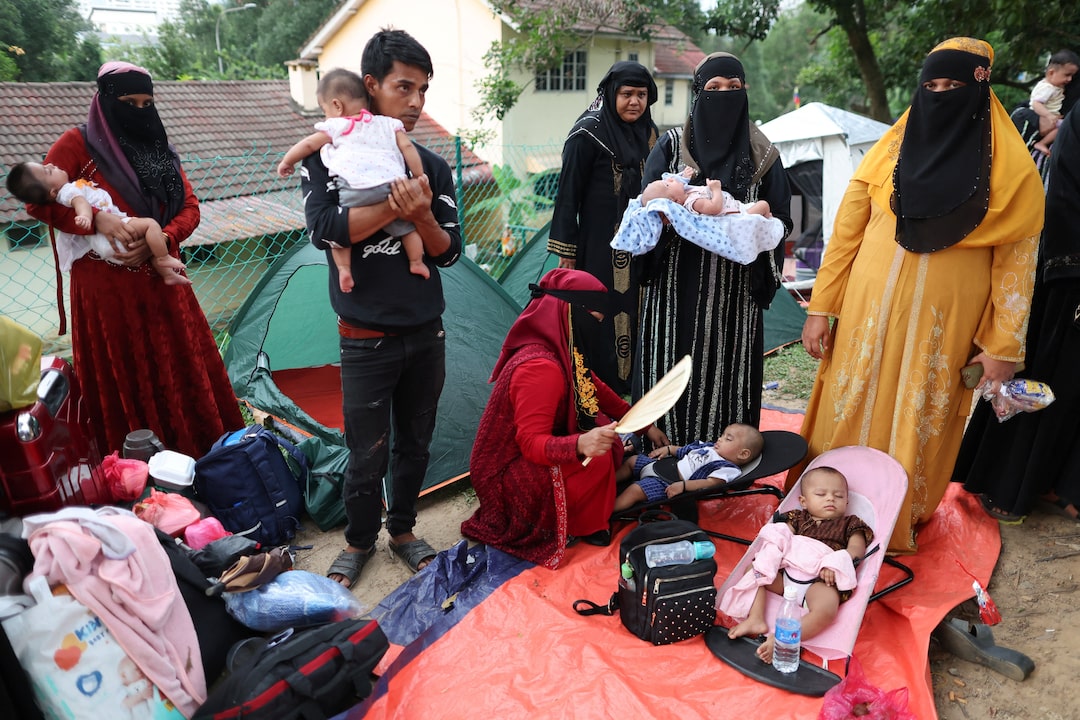
Malaysian authorities detained more than 100 Rohingya Muslim asylum seekers on Monday, who had gathered outside the UN refugee agency in Kuala Lumpur, saying they were seeking protection after being evicted from their homes.
All of the refugees outside the UNHCR were taken away with their belongings in four police trucks at around 8:30 pm local time, according to Reuters witnesses at the scene.
A police official, who declined to be identified, said they were being taken to police headquarters in Kuala Lumpur for further checks.
The refugees, who included women and children, said they were driven out of their homes by residents in the northern Malaysian state of Penang on Sunday and had travelled to the Malaysian capital on Sunday to seek assistance on resettlement from the UNHCR.
The evictions came amid a rise in online hate speech and misinformation targeting the Rohingya since May that has led to greater harassment and scrutiny of the community, including widespread school closures.
Malaysian Prime Minister Anwar Ibrahim said on Monday that the gathering outside the UNHCR building had raised concerns from the public, and warned that anyone without proper permits would be detained by immigration authorities.
Around 126,000 Rohingya Muslims were registered with the UNHCR in Malaysia as of the end of February, according to the agency’s website, though rights groups say many more remain undocumented.
The UNHCR’s office did not immediately respond to a request for comment. It told Reuters on Friday that it was concerned by rising online hate speech, disinformation and dehumanising narratives targeting Rohingya and other refugees, which it said could fuel harassment and discrimination offline.
Though it is not a signatory to the UN Refugee Convention and regards asylum seekers as illegal migrants, Muslim-majority Malaysia has long been seen as a haven for Rohingya fleeing persecution in largely Buddhist Myanmar.
That changed during the COVID-19 pandemic, when the Rohingya were accused of spreading the virus, disrespecting cultural norms and competing with locals for jobs.