Photo credit: Africa.com
She lost her father. She faced pressure to marry at 16. She lived in one of Kenya’s most forgotten corners. Then, at 19, Alice from Turkana stood on a stage in London – and everything changed for her.
Africa.com reports that there’s a version of Alice Ngitira’s story where nobody ever hears it.
In that version, she was young – as so many girls in Turkana do – and the world moves on without knowing her name. She becomes a statistic in a report about child marriage in sub-Saharan Africa.
A number. A footnote. Forgotten.
This is not that story.
Turkana County sits in Kenya’s remote northwest – a semi-arid expanse of cracked earth and relentless sun, where poverty is not a temporary hardship but a daily inheritance. It is one of the most marginalised regions in East Africa, where access to education, healthcare, and economic opportunity can feel like a rumour from a distant world.
Girls in Turkana grow up navigating pressures that would buckle most adults. Child marriage is common, driven by poverty, tradition, and the brutal arithmetic of survival. When a family loses its breadwinner, daughters are often the first to bear the cost.
Alice lost her father when she was still a teenager. The grief was heavy. The pressure to marry – to become someone else’s responsibility – became heavier.
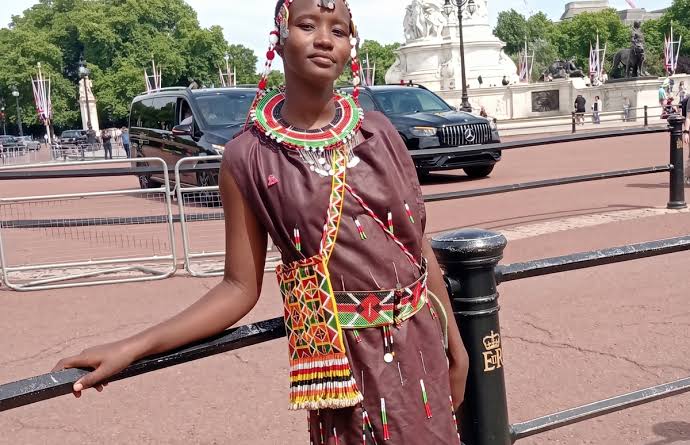
Through the Asante Africa Foundation’s Youth Livelihood Program, Alice found something she had not expected: a space that saw her potential, not her circumstances. She learned the art of traditional Turkana beadwork – intricate, beautiful, and in demand far beyond the country’s borders. She learned the basics of the business: pricing, marketing, saving, and reinvesting.
She launched her own small enterprise. The income she generated did not just support herself – it began supporting her entire family. She became, at an age when many girls are denied any kind of agency, the economic anchor of her household.
The beads she made were more than jewellery. They were proof – proof that a girl from Turkana could build something, sell something, and provide for the people she loved.
In 2025, she was selected as the recipient of the Amal Clooney Women’s Empowerment Award – one of the most prestigious recognitions for young women breaking barriers in the developing world. She travelled to London to receive it.
For a girl who grew up in a region where international travel is unimaginable for most people, standing on that stage was not just a personal triumph; it was a message – broadcast to every girl still in Turkana watching from home – that the world sees them. That their story matters. That there is no ceiling high enough to hold them.
Alice returned to Turkana not just with a prize, but with a story that has begun reshaping her community’s expectations of what girls can be and do. Dozens of young women in her area have cited her example as a reason to stay in school, resist early marriage, and believe in a future they are allowed to build for themselves.
The Asanta Africa Foundation reports an increase in enrolment in their youth programs since Alice’s recognition – a direct, measurable ripple from one girl’s decision to refuse the future she was handed.