Nigeria – A Season of Serial Betrayals
A Civic Renaissance Series for themigrant.online
When a state can no longer guarantee the safety of its citizens, the social contract begins to unravel.
There is no greater responsibility of government than the protection of human life. Before roads, before schools, before hospitals, before economic prosperity, there must be security. A citizen who cannot sleep without fear of an armed invasion, a farmer who cannot visit his farmland without risking abduction, a child who cannot travel to school without the possibility of being kidnapped, and a trader who cannot return home after a day’s work without fear of attack are citizens whose most fundamental expectation of the state has been compromised.
Security is not a privilege to be enjoyed by those who can afford private guards, fortified homes, and armoured vehicles. It is the most basic obligation of government to every citizen, regardless of wealth, political affiliation, ethnicity, religion, or geographical location.
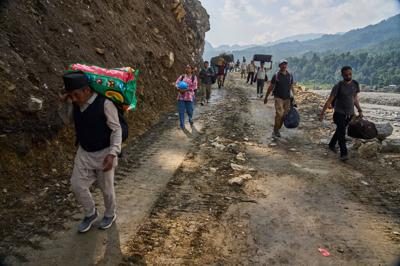
Yet, for too many Nigerians, personal safety has become a matter of luck, location, and financial means. The poor are left to pay for protection, while the wealthy purchase private security. Some communities negotiate with armed groups for the privilege of living in their ancestral homes. Others abandon their farms, businesses, and livelihoods to escape the threat of violence. Across parts of the country, fear has become an unwelcome companion of ordinary life.
This is not merely a security crisis; it is a betrayal of the Nigerian state.
The Promise of Protection:
The Nigerian state derives its legitimacy, in part, from an implicit bargain with its citizens. Individuals surrender certain freedoms, submit to the authority of the law, pay their taxes, and accept the state’s monopoly over the legitimate use of force. In return, the state undertakes to protect their lives, property, and fundamental human rights.
This is the social contract.
When individuals are prohibited from taking the law into their own hands, they are entitled to expect that the institutions entrusted with enforcing the law will protect them. When citizens are required to obey the law, they are entitled to expect that criminals will be pursued and that justice will be administered fairly.
The contract becomes meaningless when the state demands obedience but cannot provide protection.
Nigeria’s security predicament is particularly troubling because the country possesses security institutions, trained personnel, intelligence capabilities, and substantial public resources devoted to defence and internal security. The question, therefore, is not simply whether Nigeria has the machinery of security. It is whether that machinery consistently delivers the protection for which it exists.
A government cannot claim success merely because it has deployed troops, announced new operations, established committees, or issued stern warnings to criminals. The ultimate measure of security policy is whether citizens are safer than they were before.
For the mother whose child has been abducted, the farmer whose community has been displaced, or the family mourning a relative killed in an attack, official assurances provide little consolation. They need results, not rhetoric.
From Criminality to a National Emergency:
Nigeria’s security challenges did not emerge overnight, nor can they be reduced to a single cause. The country has experienced different forms of violence at different times, each shaped by its own history, grievances, economic circumstances, and political environment.
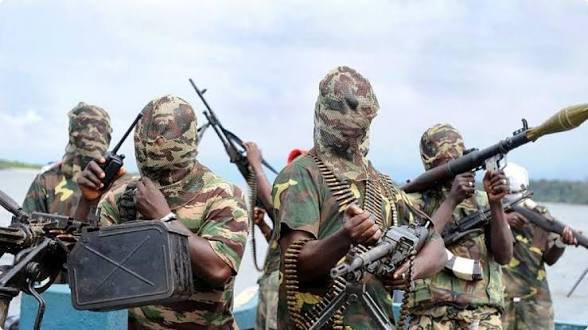
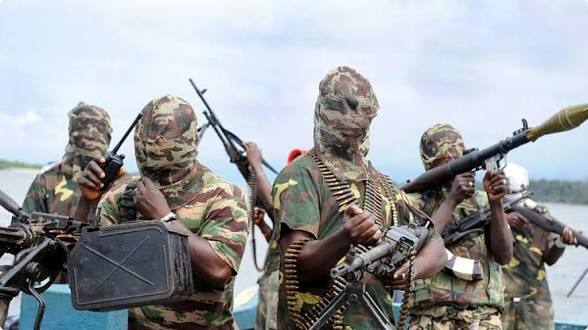
The Maitatsine disturbances of the early 1980s exposed the dangers of violent religious extremism and failures of social and security management. Later, the Boko Haram insurgency, which intensified dramatically from 2009, developed into a prolonged challenge to the authority of the Nigerian state.
The group engaged in armed robbery, mass kidnappings, communal violence, farmer-herder conflicts, and other forms of organized criminality. It has disrupted education, agriculture, commerce, and social life.
In the south-east, violent separatist-related activity and other forms of criminal violence have presented additional challenges.
These crises are not identical. Treating them as though they were would obscure the different remedies they require. Religious extremism, organized kidnapping, communal disputes, and criminal banditry may overlap, but they do not always share the same motivations or command structures.
The Betrayal of the Vulnerable:
The burden of insecurity is not shared equally.
Those with money can relocate, employ security personnel, send their children to safer schools, or abandon dangerous roads for more expensive alternatives. The poor have fewer choices. Their homes, farms, markets, and places of worship are often inseparable from their means of survival.
Insecurity reproduces inequality. Those already disadvantaged pay a disproportionate price for failure of institutions that should protect everyone equally.
The betrayal is especially painful because these citizens are not asking for exceptional privileges. They are asking for the ordinary protections that should accompany citizenship.