Photo credit: the Guardian
The north-west Chinese province is the ancestral homeland of the predominantly Muslim, Turkic-speaking Uyghur people.
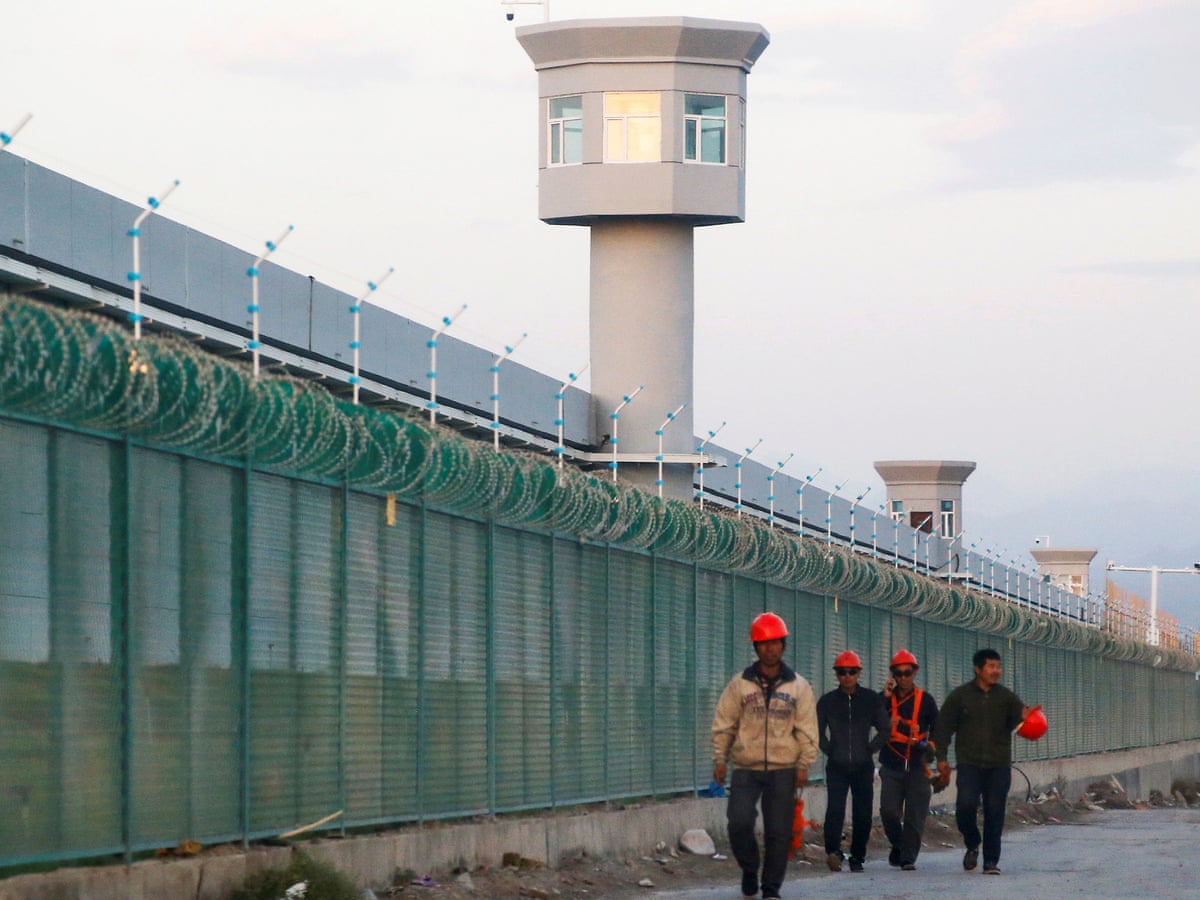
SBS News reports that it is also the site of expanding facilities where hundreds of thousands of Uyghurs and mostly Muslim minorities are believed to be held in detention.
“Uyghurs have been subjected to restrictions on religious activities for a long time, but in 2016, the Chinese government started criminalizing everyday religious activities” Yelkun Uluyol, a researcher of human rights abuses in the Xinjiang Uyghur Autonomous Region, said.
“Uyghurs have been subjected to assimilationist policies, deprived of their language rights for a long time.
“There has been a gradual shift from Uyghur language education to bilingual education and then to Han Chinese education.”
Uluyol’s dedication to tracking and documenting the plight of Uyghurs in China is deeply personal. Dozens of his family members, including his father, have been “disappeared” over the past decade.
“The first person from my wider family got into a detention camp in September 2016,” he says.
“And then gradually … nearly 30 people from my wider family from different periods of time were detained or imprisoned. And that includes my father, who was forcibly disappeared in June 2018.”
In 2022, the United Nations concluded a landmark report that the Chinese Communist Party (CCP) had committed “serious human rights violations” against Uyghurs in the region, adding that these actions may constitute crimes against humanity.
China has always dismissed and denied these allegations – the state claiming in 2019 that “vocational and training centres” in Xinjiang, as well as tight security measures, are necessary “to prevent the breeding and spread of terrorism and religious extremism”.
The United Nations and human rights groups estimated in 2022 that at least one million Uyghurs and other predominantly Muslim minorities had been detained in so-called “re-education” camps in China.
Years on, Uyghurs living in exile, including Uluyol, still haven’t heard from their family members.
“I still have no communication with home. I still don’t know where my father is, what are the allgations agaist him,” Uluyol says.
In 2024, the Australian government delivered a joint statement at the UN General Assembly urging China to implement recommendations from the 2022 UN report.
In response, Beijing dismissed the statement, describing matters relating to Xinjiang and Xizang (Tibet) as “internal affairs” and accusing Australia of being “plagued by systemic racism and hate crimes.”
Recent satellite imagery obtained by SBS News reveals that the CCP is continuing to expand and evolve its detention sites in Xinjiang.