Photo credit: The Globe and Mail
The FIFA World Cup is not just a Soccer tournament. It is the greatest sporting spectacle on earth – a four-year wait compressed into 399 days of drama, glory, heartbreak, and moments so extraordinary they pass into human memory forever. No club match, no continental championship, no other event in sport comes close to replicating the weight of the greatest World Cup moment.
FWC News reports that from the beaches of Brazil to the desert of Qatar, from a teenager named Pele lifting a trophy in Stockholm to a 23-year-old named Kylian Mbappe scoring a hat-trick in a World Cup final he still lost – the tournament has always delivered stories that transcend the sport itself.
With the 2026 FIFA World Cup arriving in the United States, Canada and Mexico this June, now is the perfect time to revisit the moments, players, and chapters that made the World Cup what it is.
These are the greatest World Cup storylines of all time:
1. Pele: The Boy King Who Changed Everything (1958)
Every story has a beginning, and the story of the World Cup as a global obsession begins in Stockholm, 1958.
Brazil arrived in Sweden carrying the weight of a nation haunted by the Maracanazo – the catastrophic 1950 World Cup final defeat to Uruguay on home soil, in front of 200.000 people at the Maracana, a wound in the Brazilian national psyche that had not fully healed in eight years. They needed something remarkable.
They found it in a 17-year-old from Bauru, Sao Paulo, who had only just recovered from a knee injury that nearly ruled him out of the tournament entirely. Edson Arantes do Nascimento – known to the world as Pelé – made his first World Cup appearance in the quarterfinal against Wales. He scored. He never stopped.
Against France in the semi-final, Pelé scored a hat-trick. In the final against the hosts, with Brazil 1-0 down, he scored again – and then again. Brazil won 5-2. At the final whistle, the 17-year-old collapsed in tears on the pitch, overwhelmed by an emotion he could not yet fully name.
He remains the youngest player to score in a World Cup final. He is still the youngest winner. And in 1970, leading a Brazil side widely regarded as the greatest World Cup team in Soccer history to a third World title, he proved that 1958 was not a teenage accident – it was the opening chapter of the greatest World Cup story the sport has ever told.
The 1970 World Cup final against Italy, won 4-1, produced arguably the most beautiful goal in football history: a sweeping, passing move of almost absurd elegance, finished by captain Carlos Alberto with a thunderous first-time finish into the bottom corner. Brazil were allowed to keep the Jules Rimet trophy forever as a result of their third triumph. The trophy has been in their possession ever since.
2. Maradona’s Two Faces: The Hand of God and the Goal of the Century (1986)
The 1986 FIFA World Cup quarterfinal between Argentina and England at the Estadio Azteca in Mexico City on June 22 is not simply a football match. It is a political event, a cultural flashpoint, and a window into the soul of the game – all compressed into 90 minutes.
The context matters enormously. Just four years earlier, Argentina and Great Britain had fought the Falklands War, a brief but brutal conflict in the South Atlantic that left hundreds dead on both sides. Football could not carry that weight cleanly. It never does.
In the 51st minute, Maradona, 25 years old and the most dangerous player in the world, pinched the ball into the net with his left hand. The referee, his view blocked, allowed the goal. The linesman saw nothing. The goal stood.
After the match, when replays confirmed what every England player already knew, Maradona smiled and said it was scored “a little with the head of Maradona and a little with the hand of God.” He later admitted it was deliberate – and described it as symbolic revenge for the Falklands.
Four minutes later, he scored again. This time with his feet.
He dribbled past five defenders across 60 metres in a run that began inside his own half and ended with the ball in the net and the world standing in silence, struggling to process what it had just witnessed. The goal was voted “Goal of the Century” in a 2002 FIFA poll. It remains there today. No other goal has come close to dislodging it.
Argentina won 2-1. They won the tournament. And Maradona – flawed, brilliant, lawless, miraculous – became the human embodiment of everything the World Cup can be: maddening and magnificent in the same breath, sometimes in the same minute.
3. The Miracle of Bern: Football Rebuilds a Nation (1954)
Long before Pele, long before Maradona, there was a moment in Switzerland that showed the world what football could mean beyond the pitch.
West Germany trailed Hungary 2-0 early in the 1954 World Cup final, then fought back to win 3-2 with Helmut Rahn scoring the decisive goal in what became known as the “Miracle of Bern.”
Hungary were not merely the favourites. They were considered the greatest World Cup team in the world – unbeaten in four years, featuring the extraordinary Ferenc Puskas, and heavy favourites against a West Germany still carrying the shame and ruin of the Second World War. When Hungary scored twice in the opening eight minutes, the outcome seemed inevitable.
It was not. West Germany equalized. And when Rahn drove the winner with six minutes remaining, an entire nation that had been silent for a decade began to find its voice again. The victory is credited to Germany as one of the key moments in the country’s post-war psychological reconstruction – proof that they could compete, that they could win, that they were part of ther world again.
4. Italy 3-2 Brazil, 1982: The March That Broke a Generation
Ask any football historian to name the greatest World Cup game ever played at a World Cup, and a significant number will pause, then say: Spain, 1982. Italy versus Brazil.
Brazil’s 1982 squad was not quite the 1970 team, but they were perhaps the most beloved team in tournament history – Zico, Socrates, Falcao, Eder – playing a brand of flowing, joyful football that made the whole world want them to win. They entered thergroup stage match against Italy needing only a draw to reach the semi-finals.
They lost 3-2. Paolo Rossi, previously suspended for his involvement in a match-fixing scandal and barely trusted by his own manager, scored a hat-trick. He would go on to win the Golden Boot and the World Cup with Italy.
Many consider the match one of the greatest in World Cup history. It is certainly the most heartbreaking. Brazil – beautiful, brilliant, beloved Brazil – were gone. The world mourned. And the game was reminded that football does not reward the most entertaining team. It rewards the team that scores more goals.
5. Roger Milla and the Birth of African Football (19990)
Italy 1990 was not a great World Cup for football. Defensive, low-scoring, and often tedious – but it produced one of the tournament’s most irresistible stories.
Roger Milla led Cameroon on one of the greatest World Cup underdog runs in World Cup history. At 38 years old, Milla’s goals, charisma, and iconic corner flag dance helped Cameroon become the first African nation to ever reach the World Cup quarterfinals.
Milla had been brought out of semi-retirement by Cameroon’s president. He was older than most of his teammates. He played as a substitute. And every time he scored – and he scored four – he danced round the corner flag with a joy so pure and unhibited that even the most partisan neutrals found themselves smiling.
Cameroon eventually fell to England in the quarterfinals, but Milla and the Indomitable Lions had changed the conversation about African football forever. The continent’s representation at World Cups would grow, culminating in Morocco becoming the first African nation to reach a World Cup semi-final in 2022 – a journey tht traces a direct line back to Cameroon in 1990.
6. Zidane’s Final: Glory, Genius, and a Headbutt (2006)
Zinedine Zidane was supposed to end his career as the greatest World Cup European player of his generation, retiring gracefully after one final World Cup. It dd not go entirely to plan.
In the 2006 final against Italy in Berlin, Zidane gave a performance of breathtaking quality – scoring a Panenka penalty of staggering arrogance and composure, controlling the game with the authority of a man who had seen everything.
Then, in extra-time, with the match level and the world watching, he headbutted Italian defender Marco Materazzi in the chest and was shown a red card. He walked off the pitch without looking back at the trophy he would never lift again.
7. Messi’s Redemption: Qatar 2022 and the Final Football Needed
Not every great storyline ends in tragedy. Some of the best end with the right person, finally, holding the right trophy.
Lionel Messi arrived at the 2022 World Cup in Qatar as the greatest footballer alive and, arguably, of all time – yet the one trophy that had eluded him, the one that would settle the Messi-versus-Maradona debate in Argentina forever, was a World Cup winner’s medal. He had reached the final in 2014. He had lost. He was 35 in Qatar, and this was surely his last chance.
The 2022 final against France is the greatest World Cup final ever played. It is not close. Argentina led 2-0 with 10 minutes remaining and the trophy was theirs. Then Mbappe scored twice in two minutes to level the match.
Argentina scored in extra time through Messi. Mbappe equalized again from the penalty spot – completing the first hat-trick in a World Cup final since Geoff Hurst in 1966. The match went to penalties.
Messi scored his. Argentina won. He fell to the turf and was swamped by his teammates.
Messi scored seven goals for Argentina as they lifted the World Cup trophy for the first time in 36 years at the Qatar 2022 tournament. Every one of those goals carried the weight of a nation and a career.
8. Mbappe: The Next Chapter Is Already Written
While Messi got his ending, Kylian Mbappe was left with something else entirely: a beginning.
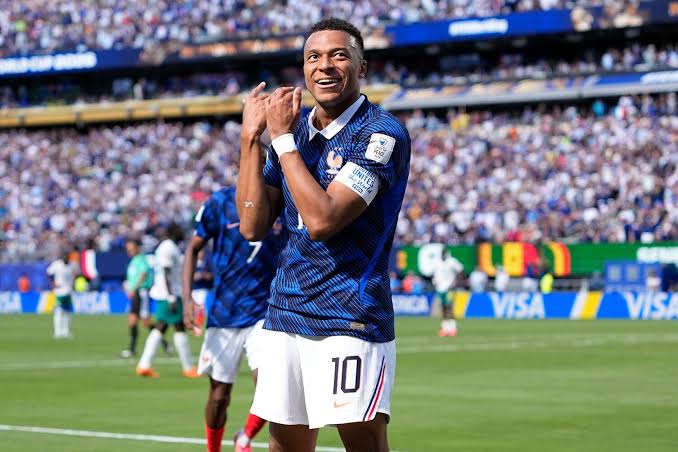
Mbappe became the first player to score four goals in World Cup finals, courtesy of his hat-trick against Argentina, and the youngest player to reach double figures for goals in World Cup history.
He was 23 years old. He had already played in two World Cup finals, won one, and scored eight goals in a single tournament.
The record of 13 goals scored in a single World Cup, set by fellow Frenchman Just Fontaine in 1958, will stand for at least another few years – but with Mbappe only 27 as 2026 tournament begins in North America, every record in the book is within reach.
He arrives at the 2026 World Cup as France’s captain, with Real Madrid’s Champions League pedigree behind him, and that three-word tweet – “We will return” – still hanging in the air. France are among the tournament’s favourites. Mbappe is among the players most likely to define it.