Photo credit: The Guardian
A child injured by a grenade raised suspicions of Ebola infection while on the operating table. The deadly hemorrhagic fever is spreading in the midst of a raging war with hundreds of thousands of displaced people, many of whom are children. The outbreak is truly a nightmare, says Dr Babou Rukengeza.
Sweden Herald reports that an Italian surgeon who has been in contact with Ebola-infected people in Ituri in northeastern Congo-Kinshasa is in quarantine in Rome, Italy’s health ministry announced this week.
The surgeon reportedly performed emergency surgery on a child who an exploding grenade had injured. The conflict-torn area is also believed to be the epicentre of the new Ebola outbreak – and during the operation, it emerged that the blast-injured child was also likely infected.
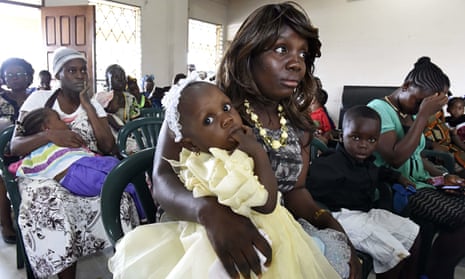
Several of the confirmed Ebola deaths so far have been children. They are the most vulnerable and almost half the residents in the volatile region are younger than 15.
Ebola is spreading much faster this time, emphasizes Congolese Doctor Babou Rukengeza, who leads Save the Children’s efforts in the country. He has worked on several previous outbreaks, but believes Congo-Kinshasa was forgotten and is less prepared.
The country’s long-running conflict has escalated with regular fighting between factions, slowing aid efforts. Up to a million people reside in densely populated camps in Ituri Province alone. There is widespread hunger and a lack of water. People have been urged to wash their hands with sand.
The infection is feared to have been spreading for a long time in secret, in areas where there is great distrust and the disease is often dismissed as malaria or a hoax. Of the more than 250 suspected Ebola deaths, only a small number have been confirmed so far.
A lot of work is directed at schools, where children first learn the importance of washing hands and avoiding touching.
The Ebola virus is transmitted between people through bodily fluids. Sexual transmission also occurs.
The illness occurs rapidly with flu-like symptoms such as high fever, headache, sore throat, stomach and intestinal symptoms and muscle pain. At the end of the course of the disease, bleeding may occur on the skin and in internal organs.
The mortality rate is estimated to be 50-90 per cent in outbreaks in affected African countries. With access to adequate intensive care, the mortality rate is likely to be significantly lower.