Photo credit: The Conversation
Mali and Nigeria, two of the countries in the \sahel region of West Africa, are separated by approximately 1,000 kilometres, with the Niger Republic between them. They differ in population size and government, but they face some of the same threats.
Modern Ghana reports that Mzsli has a population of about 22.4 million, while Nigeria has about 223.8 million. Nigeria has been a democracy since 1999, while Mali has had a military government since 2020.
The two are similar in that they are threatened by multiple armed groups operating in their territories.
Three armed groups – Islamic State Sahel Province (ISSP/ISGS), Jama’a Nudsrat ul-Islam wa al al-Mislimin (JNIM) and the Azawad Liberation Front (FLA) – are shaping the conflict in Mali.
This reached a new high in April 2026 when Jama’a Nusrat ul-Islam wa al-Muslimin a ndthe Azawad Liberation Front carried out coordinated attacks across Mali. The northern cities of Kidal and Mopti, as well as military bases in Sevare and Gao, were captured. The heart of Bamako, the capital city, was also struck, leading to the death of the defence minister, Sadio Camara.
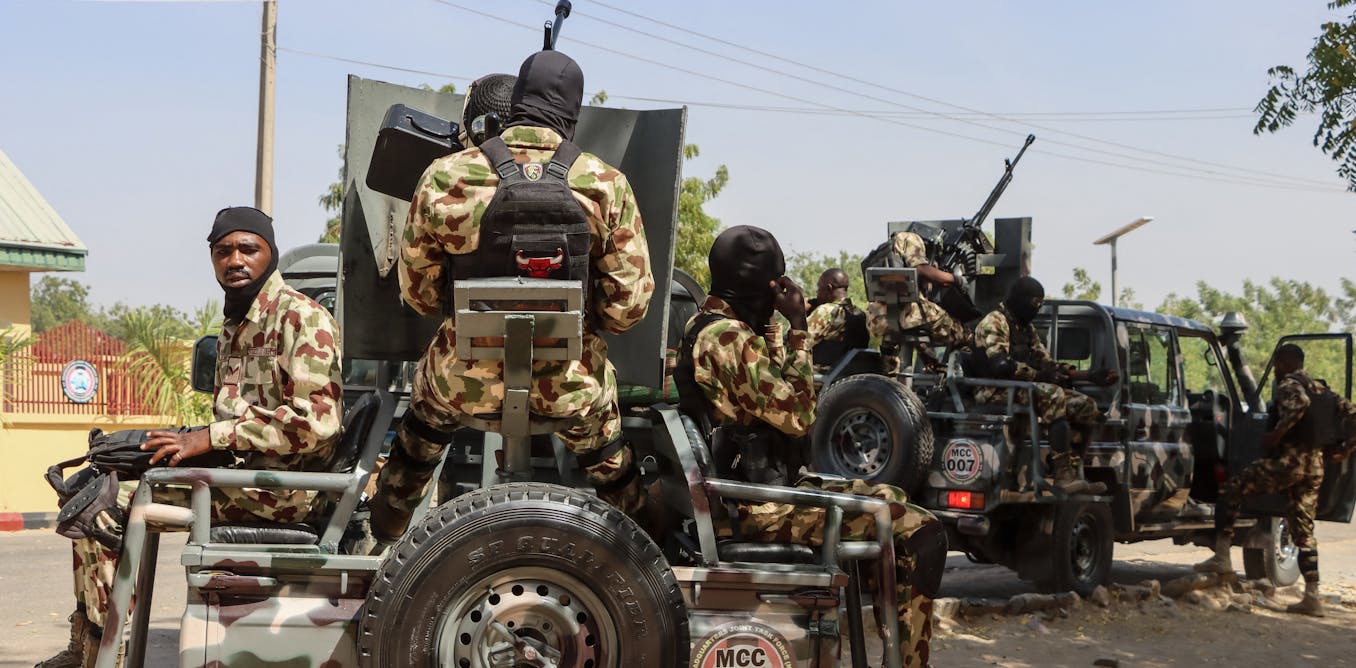
Nigeria, too, has been threatened by jihadist insurgency and banditry in the north as well as secessionists and militancy in the south. Jama’at Ahl al-Sunna li al-Da’wa al-Jihad (JAS) and the Islamic State West Africa Province (ISWAP) are active in the north.
The country lost two brigadier-generals fighting the insurgents in the north-east between November 2025 and April 2026.
The weakness of the state plays a significant role in the vulnerability of both countries to attacks. Nigeria could learn the following lessons from the April attacks in Mali:
– the possibility of alignment among armed groups
– the danger of the jihadists advancing to other Sahelian countries
– the audacity of the groups, and
– the possibility that gains of JNIM in Mali could incite rival groups in \nigeria.
Mali’s experience could turn the lens on Nigeria. Mali, Niger, and Burkina Faso have opted out of the Economic Community of West African States, ECOWAS. However, Nigeria and other countries in the region should not abandon the breakaway states at this stage. Necessary regional support should be galvanized and Nigeria can still play a leadership role in this.
Nigeria could also rejig its counter-terrorism to be more responsive. Rather than its current defensive posture, which gives jihadists the opportunity to plan, Nigeria ought to adopt sophisticated and strategic offensive counter-terrorism that takes the war to the jihadists.
By Saheed Babajide Owonikoko, Researcher, Centre for Peace and Security Studies, Modibbo Adama University of Technology.