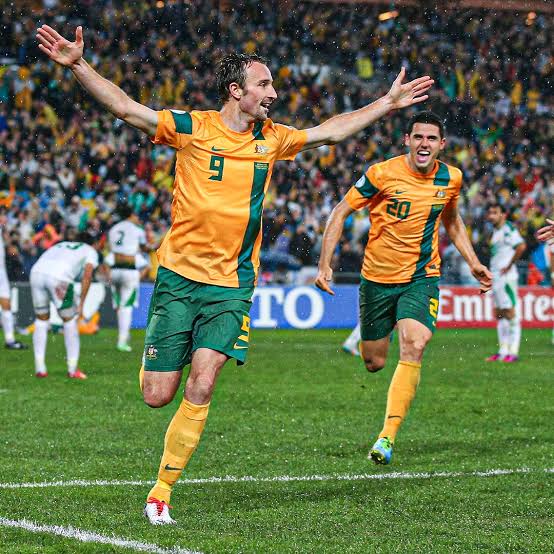
With just seven minutes left on the clock, an 80,000-strong crowd at Sydney’s Stadium Australia huddled under ponchos, watching the Socceroos struggle in the rain against Iraq.https://youtu.be/PFuteUTSB-c?si=jSH3jzZGctV1NfjG
SBS News reports that Australia desperately needed to score. At stake was a spot in the 2014 FIFA World Cup finals.
In the 83rd minute, midfielder Mark Bresciano clipped in a cross and striker Josh Kennedy rose between two defenders to head the ball into the net. It delivered the game’s only goal and booked the team’s ticket to Brazil.
That euphoric moment is one of many times Australian footballers have put their bodies on the line to deliver crucial wins for the country.
But the act of heading in football has come under increasing scrutiny in recent years, since several former players were diagnosed with dementia, including chronic traumatic encephalopathy (CTE).
In 2002, former England striker Jeff Astle became the first British footballer found to have died from “industrial disease”, following an inquest into his death. The decision was a landmark verdict linking heading the ball with brain trauma.
The centre forward – one of West Bromwich Albion’s top scorers and known for his heading ability in a career spanning the late 50s to the late 70s – was diagnosed with dementia when he was 55. He died just four years later.
Jeff Astle was known for his aerial ability, something many consider a crucial but sometimes overlooked part of a game, in which fancy footwork and swift passing tend to grab the attention of fans.
Former A-League player Dean Heffernan says headers are common in both defence and attack.
Defendeers regularly head the ball clear of other players, and plenty of goals are also scored by headers received from corner kicks and crosses – a medium or long-range pass aimed at the centre of the field, close to a goal.
“It’s very difficult to see the game without heading,” Heffner says.
Radim Mokrohajskky is the technical director of Balmain & District Football Club in Sydney. It is one of Australia’s largest community football clubs with more than 3,000 players ranging from under -5s to over -50s. He says if headers weren’t a part of the game, players would need to let the ball drop to the ground, which could lead to more high-speed chases and collisions.
But John Moriarty Football (JMF) program manager Jen Wicks, one of the few female coaches in Australia with a UEFA A Licence, says she believes banning headers could shift player selection away from “birth bias” that favours the biggest, strongest and most athletic kids.
“If we can keep the ball out of the air … and keep the ball at feet, we ultimately by design create much more creative players, instinctive players, players that can make better decisions, players with better spatial awareness, players who want to play the game with some flair and creativity and want to look at being agile and being skillful.”
Sustained advocacy from Jeff Astle’s family and fans led to the commissioning of a landmark University of Glasgow study, which assessed the long-term health outcomes of professional footballers.
Results of the Football’s Influence on Lifelong health and Dementia risk (FIELD) study were published in the New England Journal of Medicine in 2019 and found that former professional players were 3.5times more likely to die of neurodegenerative disease than others in the population.
A follow-up Scottish study published in the journal JAMA Neurology in 2021 found male professional footballers with the longest careers had a five-fold increase in risk for neurodegenerative disease. It also found defenders, who are often required to head the ball in games, carried higher risk than other positions – almost five times that of the average population.
Even when a head knock doesn’t result in a concussion, a growing body of evidence shows that it can cause sub-concussive (also called non-concussive) impacts to the brain.