Photo credit: the conversation
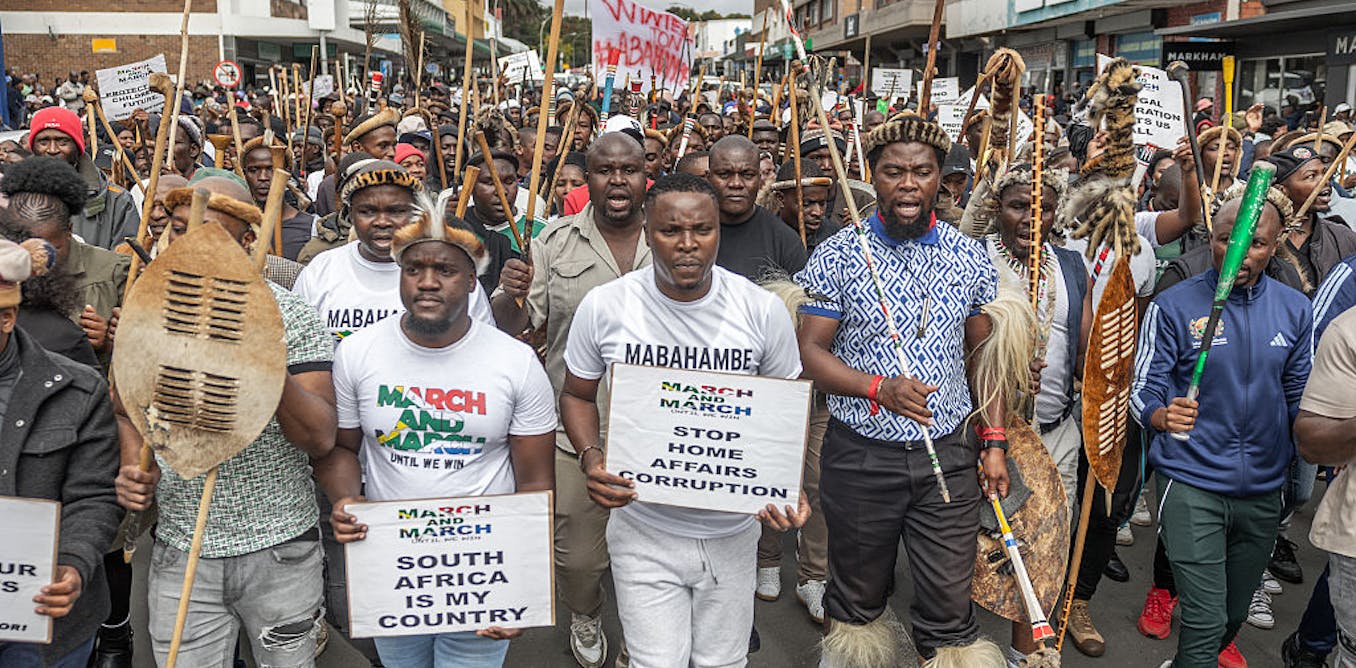
Anti-immigrant marches in several major South African cities in early May 2026 once again led to questions being asked about xenophobia in post-apartheid South Africa.
The Conversation reports that in the wake of the protests, President Cyril Ramaphosa called on South Africans to embrace solidarity with their African neighbours. For their part, foreign governments lodged their protests while police sought to curtail violence.
The tension in the country was palpable.
Are the recent outbreaks of anti-immigrant activism a harbinger of a wider uptick in anti-migrant sentiment among South Africans? Recent public opinion data from the Human Sciences Research Council (HSRC) suggests that this might be the case.
The HSRC’s South African Social Attitudes Survey is an important source of information on what ordinary South Africans think about international migration. The survey series consists of nationally representative, repeated cross-sectional surveys that have been conducted annually by the HSRC since 2003.
The latest data, from the 2025 survey, show that South Africans are more hostile towards immigrants than at any other time since the survey began in 2003. An important dimension of the change has been an attitudinal shift and hardening of attitudes towards migrants among poorer and working-class adults. In addition, the recent growth of anti-immigrant sentiments has been geographically concentrated in four provinces: Mpumalanga, Gauteng, Limpopo and KwaZulu-Natal.
The rise in anti-immigrant sentiment is particularly concerning given that the country is due to hold local government elections on 4 November 2026. Aspirant political parties, in an attempt to maintain or gain power, may seek to exploit anti-immigrant sentiment for their own ends. In this way, elections can provide a potential accelerant for xenophobia.
Growing hostility may even provoke xenophobic violence in a country that has a long history of collective anti-immigrant hate crime, and is home to more than two million international migrants.
In 2003, about a third (34%) of the South African adult population said that they would welcome all immigrants. The remainder indicated that they would accept either none (32%) or some (35%).
The proportion of the public that would be prepared to welcome foreigners tended to fluctuate within a narrow band over the 2003-2017 period.
But around the time of the COVID-19 pandemic in early 2020, the research data began to show an upswing in anti-immigrant sentiment.
About a quarter (26%) of those surveyed said that they would welcome all immigrants during the 2021 survey round. This was similar to figures in the mid-2010s
But the share that held this hospitable attitude fell in subsequent survey rounds. In 2025, 15% of adults said they would welcome all foreigners.
Conversely, the proportion of the public adopting a hostile position increased from 30% in 20l211 to 42% in 2025.
What could have caused the economically disadvantaged to become more antagonistic towards immigrants over the last five years or so?
It could be argued that the poor have become more likely to scapegoat foreigners for the failures and inequalities of the post-pandemic economic recovery. Poor people have been badly affected by a cost of living crisis and persistent deindustrialisation. They need someone to blame, and foreigners have long provided a handy scapegoat.
South Africa’s economy has struggled in the last few years, dealing with doggedly high unemployment. The country also has notoriously high crime rates. Such problems, as experts have argued again and again, cannot be directly laid at the feet of immigrants living in the country. But it would appear that they are getting blamed anyway.
The South African government has a National Action Plan to Combat Racism, Racial Discrimination, Xenophobia and Related Intolerance. The country needs to reinvigorate it and its associated processes. What’s needed is political, civic and community leaders to address legitimate socio-economic grievances without allowing immigrants to become scapegoats for deeper structural failures in society.