Photo credit: CTPost
AP reports that local fishermen have become angered by what they refer to as illegal encroachment and sabotage of the foreign-owned vessels that carry out commercial fishing in waters off the West African nation of Gambia.
There is an emerging problem of dominance in West African waters. Gambians are now fighting Gambians at sea. They are driven by market forces and foreign appetites beyond their control.
The problem came from attempted reforms. To give locals a greater say and share in the revenue, Gambia’s government now requires foreign vessels operating offshore to carry a certain percentage of Gambian crew.
Those locals have become accidental targets of an anger they understand well, after trying to compete with the Chinese-owned and other foreign vessels with little more than small wooden boats and their bare hands. There have been deadly clashes in which at least 11 local fishermen have lost their lives in the last 15 years.
The secretary general of the Association of Gambia Sailors, Abdou Sanyang, said, “It’s like most of them, when they are going fishing, it’s as if they’re going for war.”
The fighting threatens to tear fishing communities apart, while overfishing to supply seafood buyers around the world undermines livelihoods for everyone. There are concerns that the fish population off the Gambia could collapse in the coming years. That would be a business and environmental disaster. Gambia only has two main economic drivers, tourism and seafood.
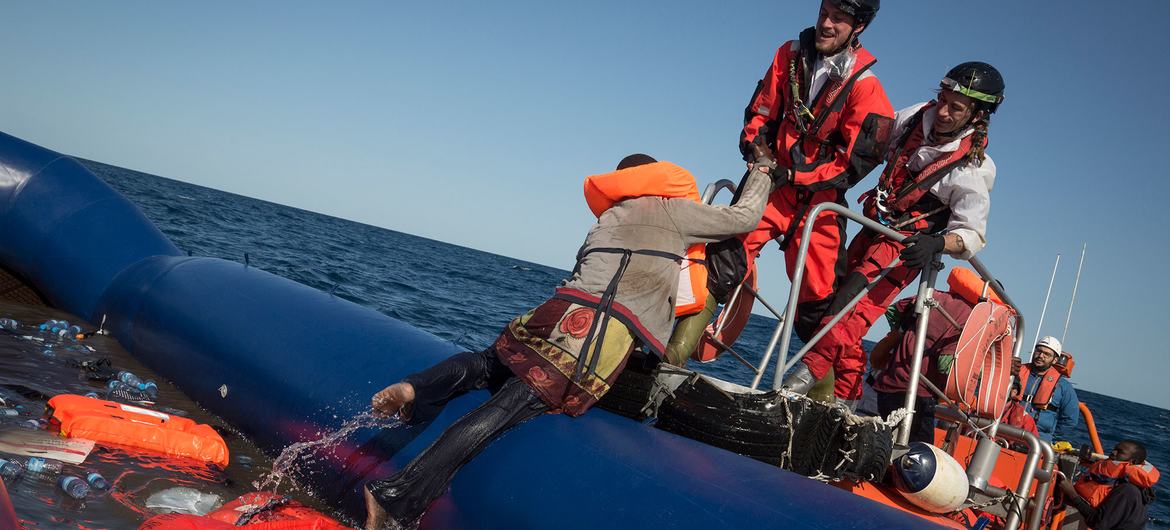
Gambia’s fishermen have known no other work for generations. The financial pressures of competing with foreign-owned vessels are now leading some to give up. They are tempted to sell their boats for use in another growing industry: migration toward Europe through the risky Atlantic waters.
Some of the fishermen become migrants themselves!
Some of them lose their fishing nets to the foreign trawlers that pull at the nets and damage them.
One of the fishermen, Famara Ndure, said, “You see them cutting your net, but you can not do anything because two men cannot go against 20 or 30 men in the sea.”
He and his brother, Salif, said the foreign vessels have become increasingly aggressive during the current government of President Adama Barrow.
Famara added, “Anywhere they want, they come and feast. That’s why we’re suffering.”
President of the Gunjur Conservationists and Ecotourism Association, Lamin Jassey, said, most of the foreign trawlers operate without proper documentation and with unauthorised gear.
A significant case has reached the courts in Gambia over fishing conflicts, and another is being prepared. One is an arson attack involving a vessel. The other is a collision last year between a foreign trawler, identified by local fishermen as the Majilac 6, and a local vessel that killed three local fishermen.
They are rare cases in a country where the pursuit of justice takes time and cash that many people don’t have.
The conflict at sea off Gambia is occurring as fish stocks decline. Fish is over-exploited, according to an Amnesty International report in May 2023 on the human cost of overfishing there. Declining fish stocks have affected food security in Gambia. Prices have risen, putting fish out of reach even for many people who pull them out of the sea.
Meanwhile, human traffickers are buying the fishermen’s boats.
Jassey said, “These agents have a lot of money. They can buy the fishing boat, like three to four hundred, five hundred dalasi, you know, from the fisherman who is sitting for like six to seven months without fishing. So that is very, very serious. That is why we’re losing a lot of our young people.”