photo credit: The Canadian Press
A Toronto patient who has been living with HIV for 27 years is in remission – and potentially cured, according to his doctors – after a bone marrow transplant from a donor naturally resistant to the virus.
The patient was diagnosed with an aggressive form of leukemia in 2021 and needed a bone marrow transplant. His medical team of clinicians at the University Health Network, Unity Health Toronto and the University of Toronto say they saw an opportunity to cure his HIV at the same time, a feat first6 accomplished in Berlin in 2007, by finding a donor match with a genetic mutation resistant to the virus.
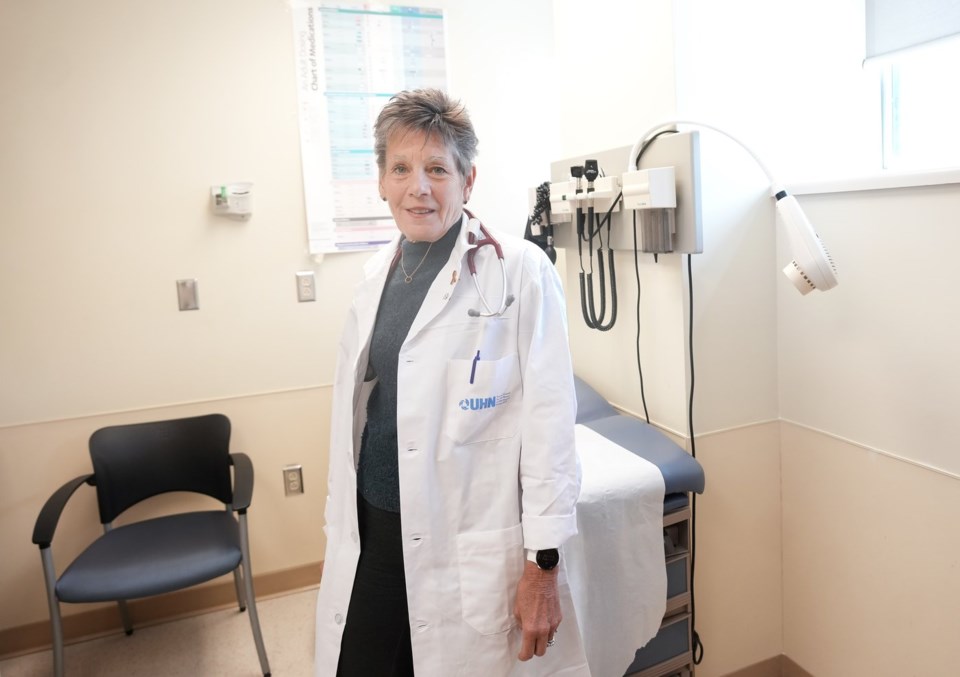
“We feel pretty confident that it’s gone, but it’s hard for us to say for absolute sure right now that he is cured,” said Dr Sharon Walmsley, director of the HIV Clinic at the Toronto General Hospital.
Walmsley, who has been the patient’s doctor since he was diagnosed with HIV and an aggressive lymphoma in 1999, said it was a miracle he survived at the time.
In July 2020, Walmsley noticed the patient’s blood counts were abnormal when he came for a routine test.
“I know that something wasn’t right,” she said, so she sent him to Princess Margaret Cancer Centre, where an oncologist diagnosed him with acute myelogenous leukemia and determined he needed a bone marrow transplant.
The search began to find the best bone marrow match. The ideal donor would also have a CCR5 gene mutation resistant to HIV.
CCR5 is a protein on the surface of an immune cell that acts as the door that HIV enters to infect the body, but about one percent of the population, primarily of northern European descent, are deficient of this gene.
That means there is no door for the virus to enter, “and so the virus can’t get into the cells,” said Dr Mario Ostrowski, a clinician-scientist at ZSt Michael’s Hospital who co-led the case with Walmsley. The new donor cells could also attack and eliminate the reservoir of virus-infected cells.
In March 2021, the transplant took place at Princess Margaret Cancer Centre. The patient had several complications afterward, such as pneumonia, which is not unusual after such a significant transformation of the immune system.
Ostrowski took samples of the patient’s cells to assess if the virus was disappearing. Once HIV was undetectable, the patient was clinically stable and his leukemia was in remission, the medical team took him off of anti-HIV therapy (ART) in July 2025 for the first time in almost three decades.