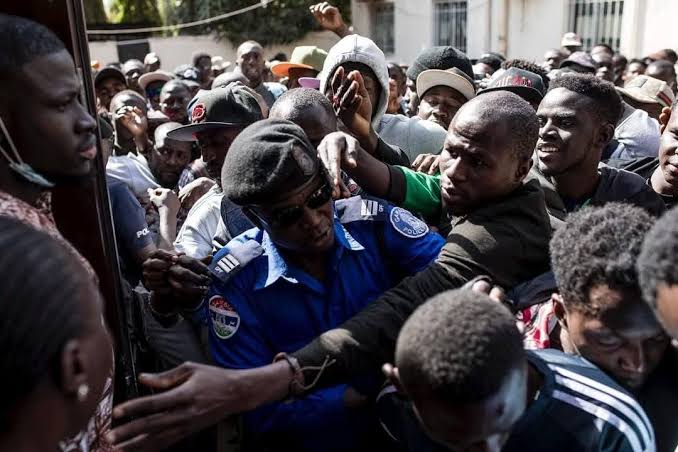
Photo credit: the Star
Across Africa, individuals migrate in search of employment and stability, seeking readily available opportunities.
The Star reports that as these movements occur, migrants travel without documentation or legal protection, which exposes them to dangers, including coercion, abuse, and trafficking. A recent article published by Diplomatic Courier highlights irregular migration as a major human rights concern.
However, public discussion around migration often focuses on border enforcement, national security and smuggling networks, and not much attention is given to how unsafe migrant routes enable sexual exploitation across migrant corridors. When migrants are forced into unsafe routes without protection, their rights to safety, dignity and freedom from exploitation are directly threatened.
Addressing this crisis requires developing safe migration options, strengthening gender-sensitive protection and confronting the structural pressures that drive people into irregular migration.
In many African countries, economic instability, youth unemployment and political insecurity shape migration decisions. For many families and communities, migration is a path to better living conditions. The resulting remittances sent home provide vital support for both household and local economies.
However, when regulated migration channels are difficult to access, migrants often turn to informal intermediaries who promise to help them travel and secure employment. This dependence significantly reduces migrants’ control over their circumstances. Informal brokers often control transportation arrangements, accommodation and job placement, allowing them to dictate terms without consequences.
These migrants travelling across borders frequently do so without enforceable contracts or legal documentation and may spend extended periods moving through informal settlements or temporary holding locations without safeguards in place. Without these protections, migrants have a limited ability to prevent abuse or exploitation. This issue is in addition to weak reporting systems, which further create conditions where exploitation can occur without immediate accountability.
Recent reports on violence against migrants travelling through Libya illustrate how unsafe conditions can escalate towards abuse and sexual exploitation. Migrants have described cases of sexual violence and captivity in transit environments controlled by armed groups and criminal networks.
Women and girls face heightened vulnerability within these systems because gender inequality intersects with legal insecurity, since many of these migrants lack documentation, and fear of detention or forced return discourages them from reporting abuse. Thus, abuse thrives in silence, as perpetrators are not held accountable for their crimes.
Migrants who cannot access work visas or regulated travel channels may rely on smugglers and informal brokers. This dependence strips migrants of control over transportation, housing and employment placement, creating conditions where exploitation can occur.
Several African regional frameworks already recognize the importance of labour mobility and free cross-border movement. Still, inconsistent implementations and a lack of knowledge prevent migrants from using these services. Addressing such barriers requires improving communication and coordination between regional institutions, border authorities and migrant support networks so that migration procedures are clearly communicated and applied.