Photo credit: the scroll
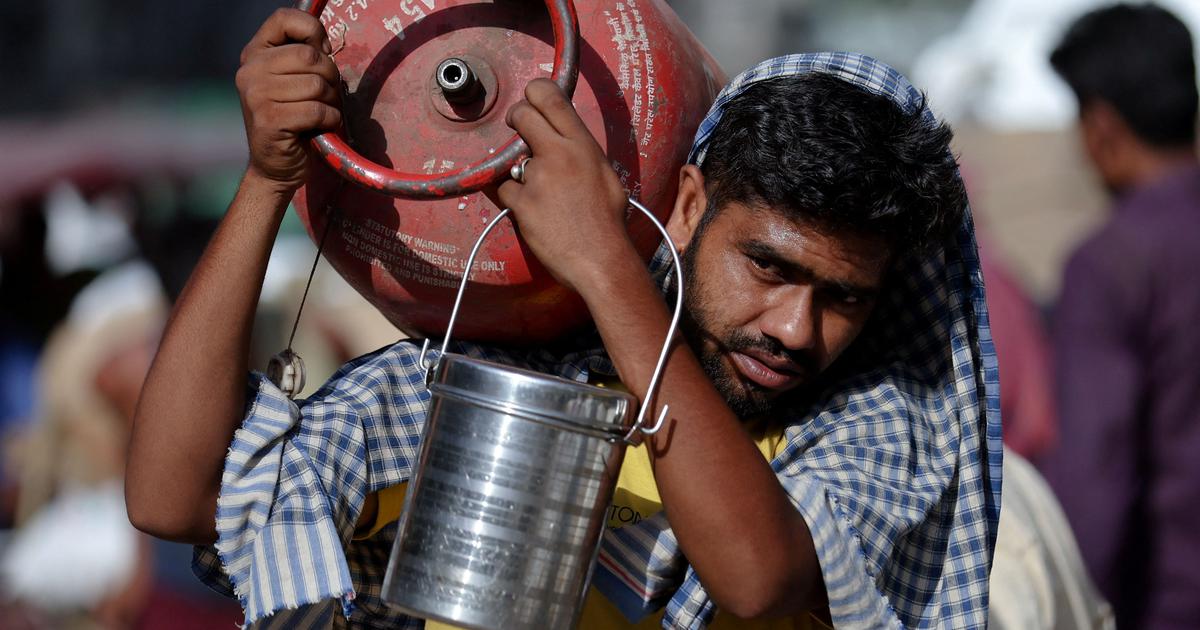
As gas shortages push up the cost of living in the cities, migrant workers are unable to decide whether to stay on or go home.
Scroll.in reports that last week, Amazon India reported a surge in sales of ready-to-eat meals on its e-commerce platforms. A salesperson attributed it to customers “relying on instant meals to navigate the current fuel uncertainty”.
Workers employed in the company’s warehouse in Manesar, Haryana, are struggling to pay for meals. Hundreds of migrants from Punjab, Rajasthan, Uttar Pradesh and Bihar work in the warehouse in the industrial town to the south of Delhi.
With cooking gas cylinders running out, many are unable to cook food in their rented homes and have instead turned to local dhabas. The eateries facing the same shortage of gas, have raised their prices.
Already, there are news reports of an exodus of migrant workers from Gujarat’s textile and ceramics industries. The paucity of gas forced some industrial units, which depend on fuels such as liquefied petroleum gas and liquefied natural gas, to shut down. In other instances, workers decided to leave despite the availability of work because they had to go days without food.
In Delhi and surrounding areas, the shortage of LPG cylinders is fast snowballing into a cost-of-living crisis for migrant workers who typically don’t own gas connections and depend on the black market.
Even those who have found cooking gas for now are using it sparsely. A worker at the Amazon warehouse in Manesar said he no longer makes rotis and curries every day as he used to before. Although he had to pay three times the regular price for gas, he was still holding off from planning a return to Uttar Pradesh, his home state.
On March 17, Sisodiya, the union leader, put out a press release urging Amazon to review wages because the gas crisis was “pushing workers toward hunger and severe financial distress”. The company has not acted on the demand so far.
Social scientist Pushpendra Kumar, who has written extensively about the challenges faced by migrants, said the Covid-19 pandemic had clearly shown that migrants in India possessed the least “capacity to cope” with disasters, both manmade and natural.