Photo credit: The New Yorker
Last August, Ahmed found himself in Belarus, at the Polish corder, watching a smuggler lean a ladder against a very high wall as members of the Belarusian border guard looked on.
The New Yorker reports that Ahmed, a nineteen-year-old Somali, is tall and lanky, with close-cropped curly dark hair. At home in Mogadishu, he liked to watch Manchester City football and Tik Tok videos. One day, members of the terror group Al Shabaab came to his house to recruit his father in their fight to overthrow the government. When his father refused, they killed him.
Soon, they came for Ahmed, too. His uncle had heard about a new route to immigrate to Europe: a travel agency in Mogadishu was advertising tickets. Ahmed’s family bought him a three-thousand-dollar package that included flights to Russia on a tourist visa and a taxi to neighbouring Belarus, where a smuggler would help him cross to Poland. Now the smuggler, an Afghan man, uurged Ahmed to climb the wall and jump.
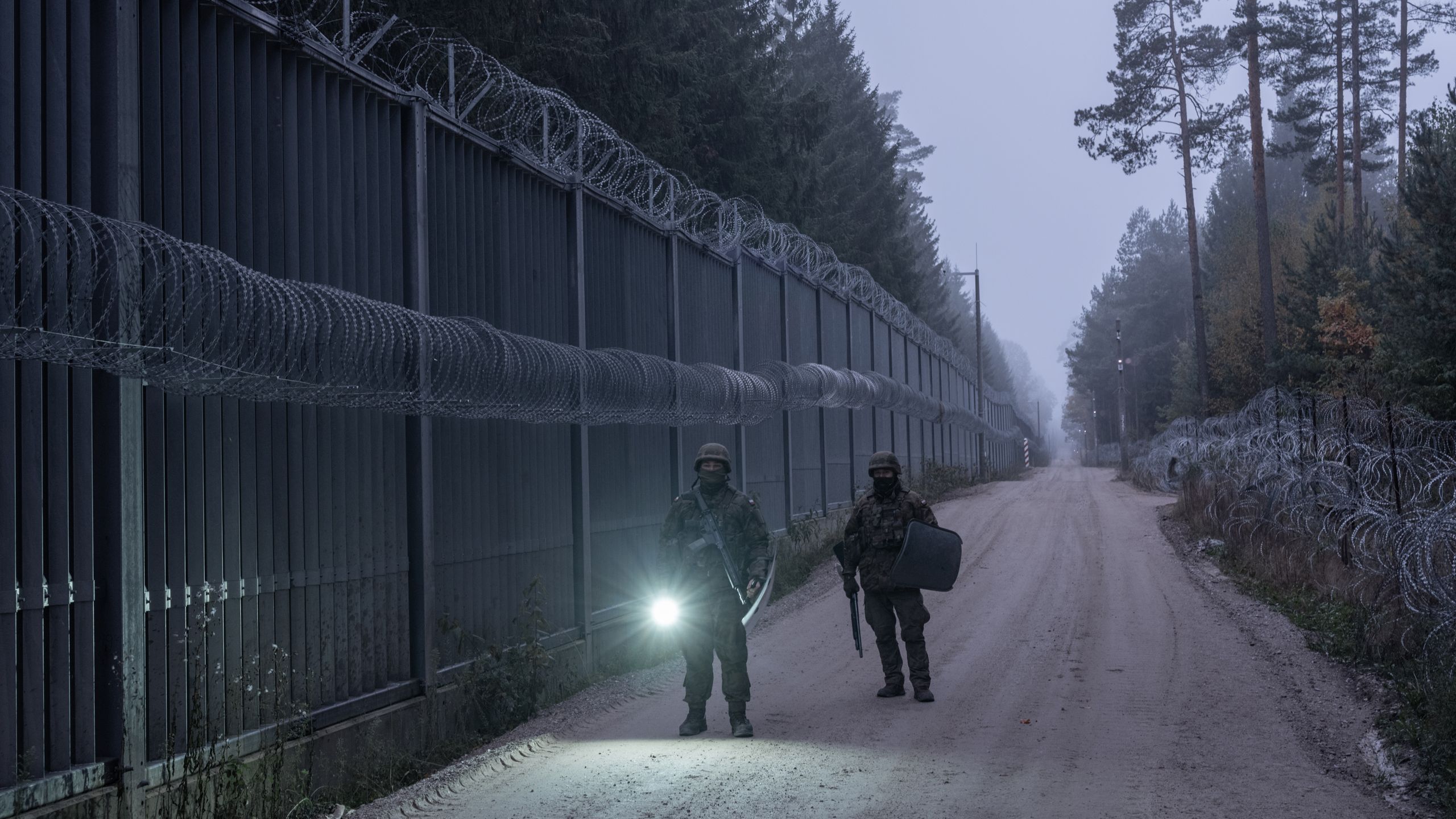
The wall was eighteen feet tall, made of steel, topped with concertina wire, and equipped with cameras and sensors. Built by Poland in 2022, it cuts through the heart of the Bialowieza Forest, a UNESCO World Heritage site that is Europe’s last great lowland primeval forest, largely untouchable by humans. The forest, which straddles Poland and Belarus, is famed for its old-growth trees and its rich biodiversity: it is home to thousands of plant and animal species, from endangered fungi and lichen to lynx, wolves, and the largest free-roaming herd of European bison. In the past four and a half years, Bialowieza and neighbouring forests have also become a route for thousands of migrants, primarily from the Middle East and Africa, seeking to enter Europe.
Ahmed (not real name) climbed the ladder and jumped into Poland. He fell on his arm and his shoulder, fracturing bones. Then it was time to run.
For the next two days, he traversed some twenty miles of Polish woodland with other Somali teenagers. They were trying to reach the edge of the forest, where a smuggler’s van would meet them. Apart from encountering wild animals, they had to hide from border guards and local villagers, some of whom turned migrants in to the authorities.
Exhausted and in pain, Ahmed often wanted to give himself up. Six months earlier, he could have tried to claim asylum instead of crossing illegally. But in March, Poland had suspended that right for most people. Now, if he were caught, he would likely be sent back to Belarus or be deported back to Somalia, where, he was certain, he’d be killed by Al Shabab.
On the second night, the Somalis reached the meeting point with the smuggler, a twenty-one-year-old Romanian man. He drove them northwest, toward Bialystok, the closest city. According to a police report, sometime after 9 pm, the smuggler tried to circumvent a police roadblock near Bialystok and veered into a ditch. Photographs taken by the police show the van on its side and a group of young Somalimen, including Ahmed, handcuffed and lying face down in the grass.
To be continued
Source: Pulitzer Centre