Photo credit: WSJ
Rebel fighters in Sudan’s civil war have landed on a lucrative way to fund their brutal campaign: looting the country’s museums.
The Wall Street Journal reports that historians and curators are saying that the Rapid Support Forces that have been fighting government forces for the past three years are now targeting Sudan’s rich cultural history and selling it to the highest bidder in the illicit international art market. Across the country, their fighters have joined private looters in strippiAbdelrahman Ang museums of valuable artifacts chronicling the country’s history from the Stone Age to the rise of Islam.
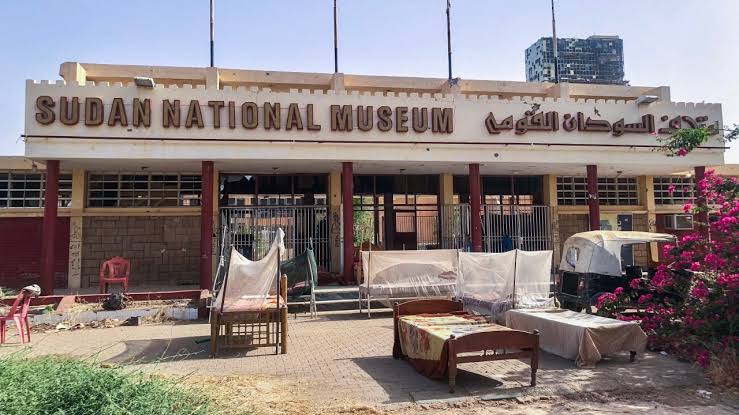
Sudan’s National Corporation for Antiquities and Museums, or NCAM, estimates they have looted treasures worth $150 million since the conflict began. In recent weeks, videos shared online have shown empty display cases that once held gold and jewelry that belonged to the ancient kings of Napata and Meroe at the Sudan National Museum. In the war-charred city of El Fasher, the 19th-century palace that housed the Sultan of Ali Dinar Museum was emptied before being bombed into rubble and ash. The Nyala Museum, in the current de facto rebel capital in western Sudan, was ransacked and robbed of its antiquities before being repurposed into a military base.
Abdelrahman Ali Mihamed, a culture expert with the United Nations Educational, Scientific and Cultural Organization who is helping with the recovery of the looted artifacts, said the rebel fighters systematically targeted the most valuable items during raids on museums.
The contents of Sudanese museums are an enticing targett for the RSF. The rebel group, formed largely out of ethnic Arabs, has its roots in the notorious Janjaweed militias, which killed some 200,000 people on Darfur – mostly Black Africans – in the early 2000s and has again been accused of genocide by the US in the latest conflict. Over the years, it was sustained by proceeds from the sale of gold to the gulf region and payments for guarding mines owned by Russia’s mercenary outfit, the Wagner Group, in western Sudan.
But since the outbreak of the war three years ago, there hasn/;t been much of either. The military has bombed rebel-controlled gold mines, while the Russians have largely vanished after the death of the Wagner founder Yengeny Prigozhin.
That is where the museums and their artifacts come in.
In the early days of the conflict, RSF fighters took aim at all four museums in the capital, Khartoum. At the National Museum, they positioned snipers on its rooftop before systematically looting much of its gold, including much of its gold, including a flower-shaped collar found in the pyramid of King Talakhamani, a Kushite king of Meroe during the second half of the fifth century BC.
During raids on museums, looters largely focused on the most portable and valuable items, leaving the heaviest behind. But those weren’t entirely spared. Some of the pharaoh statues at the entrances of ruined museums are pockmarked with bullet holes after seemingly being used for target practice during the rebel occupation, according to images shared online and by museum workers.
Coffins holding centuries-old mummies were also destroyed. The fighters also targeted the Sudan Natural History Museum at Omdurman Ahlia University and set handwritten manuscripts and rare books on fire in an apparent attempt to obliterate Sudan’s identity.