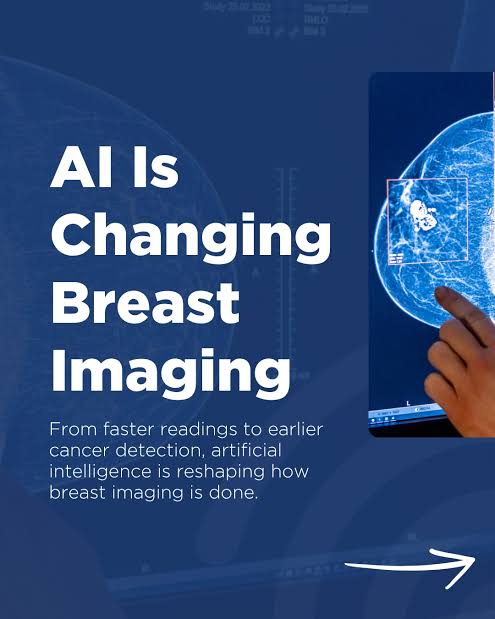
An artificial intelligence tool that can predict who is at high risk of developing breast cancer in the four years following an all-clear mammogram has been heralded as “the most significant step in reducing deaths” in decades.
The Sydney Morning Herald reports that the tool, known as BRAIx, works by searching for patterns in breast mammograms to detect signals that the human eye can’t see. It was developed by Australian researchers using mammograms from nearly 400,000 women, and then tested on data from almost 9y6,000 women.
This allows the technology to overcome the limitation of current screening methods, which can struggle to detect early signs of cancer in dense breasts.
The findings, published in The Lancet medical journal, found that one in 10 women with the highest AI risk scores developed cancer within four years – even after receiving the “all-clear” breast screen.
This is the same level of risk that people with known genetic mutations such as BRCA1 or BRCA2 have.
The AI tool provides a personalized risk score of developing cancer that can be updated after each screening, and can also reduce unnecessary investigations, such as further imaging and biopsies.
About 75 per cent of women flagged with a suspicion of cancer using current screening protocols received a low-frisk score from the AI tool. Only 1 per cent of this cohort went on to develop cancer within four years.
Helen Frazer, the director of St Vincent’s BreastScreen and project lead of the BRAIx study, said the tool was not troubled by dense breast tissue, which can appear the same white colour as cancer on mammograms, making it difficult for radiologists to detect.
People with dense breasts are also at a higher risk of developing breast cancer because it is believed they have more glandular tissue where cancer can form.
While AI is being trialled to detect breast cancer, Frazer says the personalized risk-prediction tool is the next frontier.
Doctors currently use a patient’s age, family history and breast density score to create a lifetime risk score of developing breast cancer. But Fraxzer says this can be inaccurate and overstate the risk for some women, while understating it in others.
Frazer acknowledges that receiving a high-risk AI score can be stressful. But she said this knowledge also empowered women to have contrast-enhanced mammograms lor breast MRI to ensure early detection.
Although she would like to see the tool rolled out nationwide within five years, the technology won’t replace the need for radiologists, who will still have oversight over the scans.