A Dubai-based company, Blue Carbon, has been taking over large swaths of land in Africa. This has caused some uproar about the risks to the locals’ livelihoods.
ABC News reports that in 2023, the Liberian government agreed to sell about 10% of its land to the company. The land could have been logged and used for farming, the people’s primary livelihood.
Blue Carbon, which intends to conserve the land, will make money through conservation by selling carbon credits to polluters to offset their emissions as they burn fossil fuels. However, some experts say the model offers little climate benefit, while some activists label it “carbon colonialism.”
Activists argue that the government has no legal right over the land. They say that Liberian law acknowledges Indigenous land ownership. But the government and the company agreed in March, 2023 without consulting local communities. The communities are now concerned about a lack of protection.
“There is no legal framework on carbon credits in Liberia, and so we don’t have rules and regulations to fight for ourselves as a community,” said Matthew Walley, whose community, Neezuin, could see about 573 square kilometres signed away to Blue Carbon.
Blue Carbon has reached agreements with at least five African countries, enabling the company to control large parcels of land on the continent.
According to Amnesty International and Survival International, locals have been evicted to make way for other carbon credit projects in Kenya. The groups have criticized the projects as “culturally destructive”, lacking transparency and threatening the livelihoods and food security of rural African populations.
Simon Counsell, an independent researcher of conservation projects in Kenya, Congo, Cameroon and other countries, said, “Many such projects are associated with appalling human rights abuses against local communities at the hands of park rangers.”
Counsell, a former director of Rainforest Foundations UK, a non-profit supporting human rights and environmental protection, said, “The majority had involved evictions, most were involved in conflicts with local people, and almost none had ever sought or gained landholders consent.”
Africa contributes the least to greenhouse emissions. However, its vast natural resources are significant in the fight against climate change. People traditionally rely on forests for their livelihoods, thus highlighting the tension between climate goals and economic realities.
Governments in Africa are tempted to undertake these kinds of conservation projects because they are broke. The projects generate badly needed income despite concerns about human rights abuses and transparency.
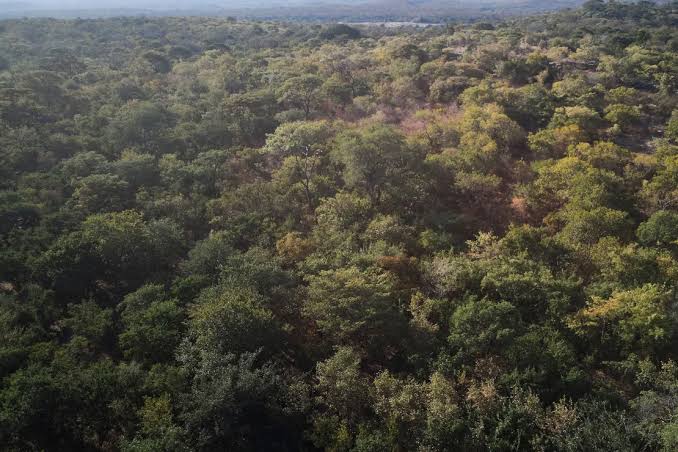
Blue Carbon has another project under development in Zimbabwe. According to the company’s website, it involves approximately 20% of the country’s land.
Through unclear agreements, the company has potentially secured staggering amounts of land across countries like Kenya, Liberia, Tanzania and Zambia since its formation in 2022.