Photo credit: Instagram
“Water, water everywhere, nor any drop to drink!” – Samuel Taylor Coleridge’s “The Rime of the Ancient Mariner”.
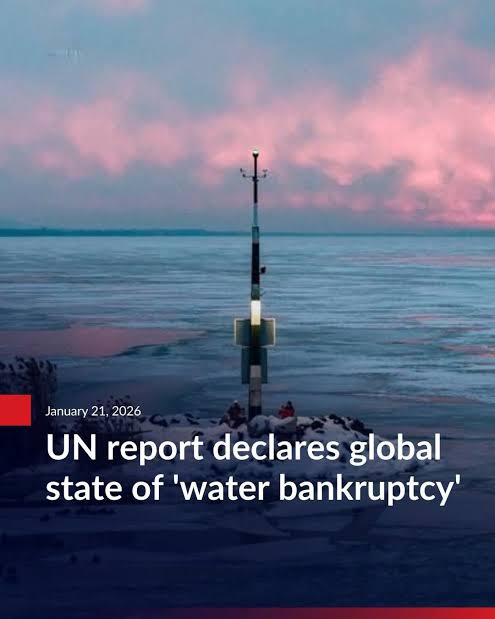
The world has entered an era of global “water bankruptcy” with irreversible consequences, according to a new United Nations report.
CNN reports that water waste problems afflict regions worldwide: Kabul may be on course to become the first modern city to run out of water. Mexico City is sinking at a rate of around 20 inches a year as the vast aquifer beneath its streets is overpumped. In the US Southwest, states are locked in a continual battle over how to share the shrinking water of the drought-stricken Colorado River.
The global situation is so severe that terms like “water crisis” or “water stressed” are now out of fashion in explaining the magnitude, according to the report published on Tuesday by the United Nations University and based on a study in the journal Water Resources.
With bankruptcy, while it’s still vital to fix and mitigate where possible, “you also need to adapt to a new reality… to new conditions that are more restrictive than before,” Kaveh Madani, director of the UN University’s Institute for Water, Environment and Health and the report’s author.
The concept of water bankruptcy works like this: Nature provides income in the form of rain and snow, but the world is spending more than it receives – extracting from its rivers, lakes, wetlands and underground aquifers at a much faster rate than they are replenished, putting us in debt. Climate change-fueled heat and drought are compounding the problem, reducing available water.
The result is shrinking rivers and lakes, dried-up wetlands, declining aquifers, crumbling land and sinkholes, the creep of desertification, a dearth of snow and melting glaciers.
The statistics in the report are stark: more than 50% of the planet’s large lakes have lost water since 1990, 70% of major aquifers are in long-term decline, an area of wetlands almost the size of the European Union has been erased over the past 50 years, and glaciers have shrunk 30% since 1970. Even in places where water systems are less strained, pollution is reducing the amount available for drinking.