Photo credit: the Guardian
In much of West Africa, democracy survives not because citizens defend it, but because soldiers occasionally tolerate it.
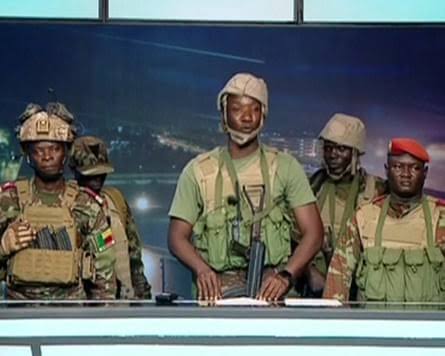
And you can take that to the bank because it is the brutal truth behind the region’s expanding map of military rule. from Mali to Niger, Burkina Faso to Guinea, coup-makers do not need tanks to overpower the state.
They only need one thing, a\ public that has felt so betrayed by the lack of the fruits of democracy by so-called elected leaders that it would gladly welcome an alternative. The alternative, in many cases, is the military. That is why in many of the captured states, some civilians even go on the armoured tanks of the military.
The question is simple but revealing: How many West Africans are willing to risk their lives to stop a coup?
I remember my school days. I attended what we called an “aluta” institution. The meaning of aluta is not so far. It’s from “Aluta continua, Victoria e certa,” which means “the struggle continues, and victory is certain.”
It simply means the students are so conscious of their rights, the duties and obligations of their nation and the world in general, that if we noted a slip, either deliberate or otherwise, we’d be up in arms. We would demonstrate, which could sometimes mean travelling to the seats of government and making news outlets and other interested parties aware of the situation.
My family was so concerned about my safety that they would always say that when a demonstration happened, I should neither be in front nor at the back. They wanted me to be in a comfort zone, which was the middle. Their thinking was that if it came to a stage where the security apparatchik started raining live bullets or tear gas, I would be safe.
Pray, who wants to die?
The honest answer: very few.
Now, let’s go back to preventing a coup by paying the ultimate sacrifice.
Is it worth dying for a corrupt government and making democratic change an illusion?
Some might conclude it’s a matter of bravery. But I beg to differ.
People in West Africa are in a catch-22 situation. While recognizing the fact that a military rule is not as good as a proper democracy, most of those countries are quasi-democracies.
Democracy is beautiful in theory, but in West Africa it often arrives enveloped in disappointment. For most citizens, democracy has meant collapsing economies, rising insecurity, corrupt elites and elections decided before votes are cast.
Dying for a system that has rarely protected, respected, or empowered the people would be strange. Citizens will only defend what they trust. West Africa’s democratic institutions are yet to earn that trust.
People live under immense pressure, jobs are uncertain, social services are unreliable, and insecurity is widespread across the region. In such circumstances, survival is the first rule of life. People can not afford to follow any ideology. A man fighting to feed his family has no energy to fight for constitutional purity.
A person struggling with hunger cannot be expected to reject a soldier and stick to a president in a failing system.
Too many citizens feel democracy belongs to politicians, judges, foreign embassies and NGOs. They don’t feel democracy belongs to them. Most of them do not even take voting seriously. Rather than exercising their franchise on election days, most youth are seen playing soccer on the deserted streets, while some wealthy ones stay inside watching TV.
That’s because they are alienated, and that is the oxygen that coups breathe.
Many West Africans, especially the older generations, remember military rule not as tyranny, but as a time of discipline, quick decisions, visible authority and reduced political drama. This weakens the instinct to defend civilian rule, because the alternative does not feel entirely unacceptable.
One can go on and on.
But the military can never be the answer. In most cases, they impose their command structure on the nation. The seniors would be at the top. If they fail to perform well, any complaint by junior officers or even civilians would be treated as treason.
Methinks West Africans should look toward a homegrown system of governance. We were ruling ourselves before the coming of Western education. Let’s look at the rulership in the old Oyo Empire. We could examine Ubuntu and other Indigenous African systems of rulership and make them suit the present age.