Photo credit: DW
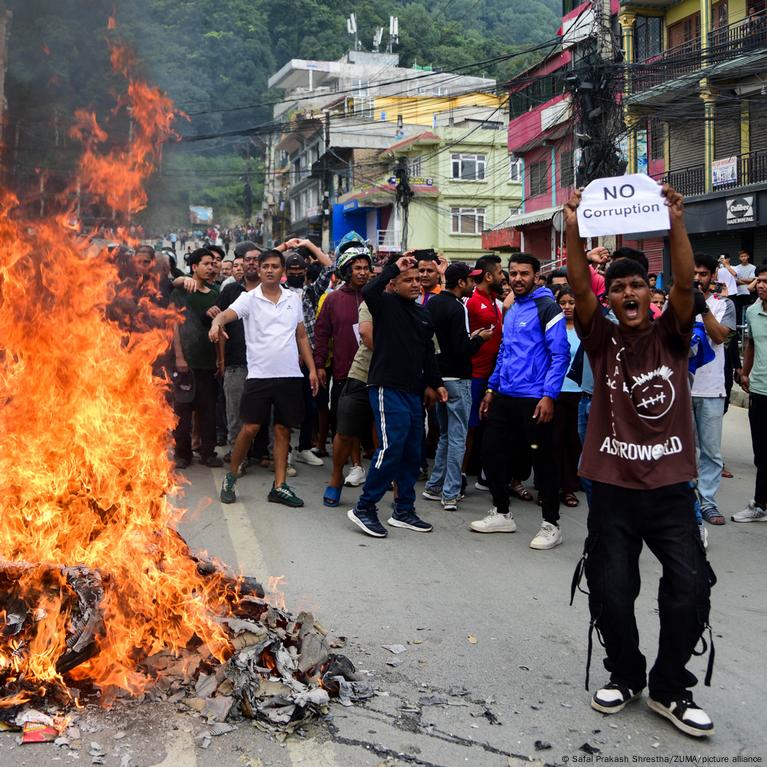
While Nepalese demonstrations have brought down the country’s government, the most recent youth-led protests across Southeast Asia have been less violent. However, they have forced the authorities to make rare concessions on tackling elite perks and corruption.
DW reports that although the spark differs by country, the kindling is the same: Stagnant prospects for young people, widening inequality, and a daily feed of elite privilege on Gen Zs phone screens.
The World Bank released an update this month underscoring the mood across the continent. One in seven people in China and Indonesia is employed. Much of the region’s job creation has shifted from factories to lower-paid services, eroding the steps that once pulled millions into the middle class.
The “vulnerable-to-poverty” group, in which the young are overrepresented, is now larger than the middle class in most Southeast Asian economies.
Phil Robertson, director of Asia Human Rights and Labour Advocates, said, “The absolute failure of governments across the region to address the yawning gap between the richest and the poorest means there is fertile ground for protests by young people who believe they have nothing to lose by heading out to the streets.”
The ban on major social media platforms and a long-simmering anger over corruption escalated the protests in Nepal on September 8. It led to the removal of Prime Minister Khadga Prasad Sharma Oli’s government, forced the dissolution of parliament, and led to the reversal of the social media ban.
Soon after, Indonesia saw weeks of deadly unrest. It was initially triggered by fury over legislators’ generous perks while ordinary people face a cost-of-living crisis. Beginning late August, the protests spread across the country. At least ten people were killed and thousands detained by Indonesian authorities.
President Prabowo had to reduce the privileges for politicians and made a sweeping reshuffle that ousted the austere, business-friendly Finance Minister and other top officials.
After that, it was the turn of Timor-Leste. One of the poorest countries in Asia, it witnessed several days of student-led rallies outside parliament in late September. The authorities had to denounce plans to buy new vehicles for MPs and stopped a law granting lifetime pensions to lawmakers.
In the Philippines, thousands of mostly young protesters gathered in mid-September at Manila’s Rizal Park. They rallied against some $1.8 billion being lost to alleged corruption in bogus relief projects.
Although the protests have earned the title of “Gen Z uprising”, their core issues of economic injustice and elite privilege cut across generations.
In most of these countries, union members, informal workers, and older civil society networks joined marches once the initial student push broke the fear barrier.
Governments across Southeast Asia are now on notice that conspicuous privilege is combustible, according to analysts. However, it is not easy for the privileged to shorn the perks accruing to them. So, in countries facing democratic erosion, such as Indonesia and the Philippines, officials are already framing youth actions as “riots,” “anarchic,” or even “foreign-funded,” to delegitimize dissent.
The harder test will be turning street power into slow, technical reform.
According to experts, mounting political and economic grievances are likely to fuel more youth-led protest movements in the region. Youth’s close contect with social media where news spreads like wildfire, will spur more successful Gen Z protests.