


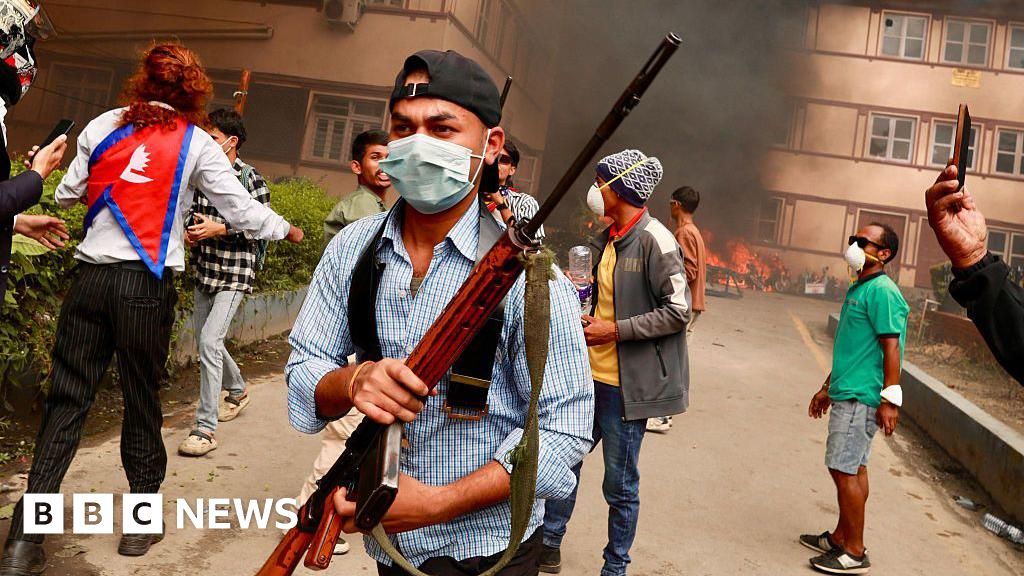
Photo credit: BBC
If you haven’t heard, hear it now!
Gen-Z, those born between the mid-to-late 1990s and the early 2010s, exhibits more secretive and guarded behaviours in both personal and professional contexts than any other age group. They generally compartmentalize their lives and use private online spaces to curate a specific identity.
Fortune magazine reports them as being “especially secretive”. While 52% of baby boomers are most likely to hide parts of themselves on the job, for Gen Z, it is 68%. They might be the most sensitive to authenticity based on the digital environment they grew up in.
Forbes reports that their seniors may be stereotypical and believe that they are lazy, entitled, and demand constant validation and empathy, but they couldn’t be more wrong, as Anna Liotta, the author of “Unlocking Generational Codes,” has found that Gen-Z is fiercely value-driven, deeply resourceful, and highly sensitive to hypocrisy. They are not afraid of hard work; they just refuse to burn out for a system that doesn’t seem to care about them.
Lotta says, “The truth is that they crave human-centred transparent leadership, but they won’t stick around for performative empathy or outdated hierarchies.”
In Nepal, Transparency International’s 2024 Corruption Perceptions Index, which scored 180 countries on a scale from 0 (highly corrupt) to 100 (very clean), gave Nepal a score of 34. When ranked by the score, Nepal ranked 100th among the 180 countries in the sector. In the Asia Pacific region, the best score was 84, the average was 44, and the worst was 16. Worldwide, the best score was 90, the average score was 43, and the worst was 8.
Youths, especially Gen-Zs, were watching with bated breath and perhaps thinking the government would improve and possibly “go and sin no more”. After all, their government wouldn’t be the first to be corrupt. Through the use of social media, they were connected to the world, and they knew what was happening elsewhere.
But with the unfortunate ban on social media, the Gen-Zs felt they had had enough of the corruption in high places, and hence the violent protests.
Gen-Zs were of the thinking that the government should have banned corruption instead of using a sledgehammer on social media, which was a window to connect with the world. Apart from taking their frustration out by spending time on social media apps, youths who are interested in further education use social media to receive lectures.
And, of course, there’s the challenge of controlling free speech!
At the last count, 51 people have been killed and over 1,000 people have been injured during the violent protests. Over 12,500 prisoners who escaped from various jails are still on the run.
There is a simple lesson to be learnt from the protests in Nepal. That is, governments exist for the people. The moment governments are not meeting people’s demands, especially those of the youth, there is a problem. However, the problem may not be manifest until people rise to claim their rights.
But then, must governments wait for people to confront them?



Really interesting read! The Philippines market is definitely embracing new online platforms.
Thanks for sharing. I read many of your blog posts, cool, your blog is very good.