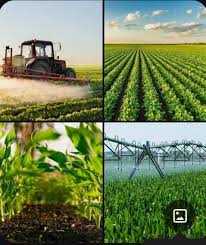
Photo credit: Ena
The IGAD region, of which Ethiopia is a vital component, is a dynamen and strategic region demographically, economically, and politically.
The Ethiopian News Agency reports that the region is home to over 230 million people, most of them young, a demographic reality that carries both opportunity and risk.
The region faces a convergence of complex challenges, confronting overlapping economic, social, and environmental pressures.
At the centre of these pressures, climate change has emerged as a powerful accelerant, intensifying vulnerability and placing unprecedented strain on natural resources.
The effects of climate change are increasingly visible, ranging from prolonged drought and sudden floods to erratic rainfall patterns that disrupt water availability and agricultural productivity.
These climate shocks, compounded by environmental degradation, resource scarcity, conflict, and poverty, have reshaped livelihoods across the region.
One of the most visible outcomes of this pressure is migration – both within and beyond national borders.
Internal displacement is widespread, as rural communities move toward urban centres in search of alternative livelihoods. This movement has contributed to the rapid expansion of informal settlements and growing pressure on urban infrastructure and basic services.
Cross-border migration has also intensified, driven by economic hardship, climate stress, and insecurity, making population movement a defining feature of the region’s current reality.
Understanding the links between climate change, economic opportunity and migration is therefore essential.
Against this backdrop, Ethiopia has embarked on an ambitious rural transformation agenda aimed at strengthening climate resilience and easing migration pressures – both domestically and across the wider Horn of Africa.
Ethiopia/’s agricultural transformation initiatives are not merely economic interventions; they represent a broader strategy to tackle poverty, unemployment, and environmental degradation through systemic change in rural production.
These initiatives increasingly serve as a reference point for other countries in the Horn of Africa seeking to build climate-resilient rural communities and reduce migration pressures.
Unemployment remains a major challenge in Ethiopia, particularly among the youth.
Over the next decade, over 12 million individuals are expected to enter the working-age population, intensifying the need for sustainable job creation.
In response, the Agricultural-focused Dignified Employment for Youth in Ethiopia (ADEY) program, implemented in partnership with Mastercard Foundation – supported by a USD 74.5 million investment – aims to create 611,000 sustainable jobs, with particular emphasis on young women.
Climate resilience forms a central pillar of Ethiopia’s rural transformation agenda.