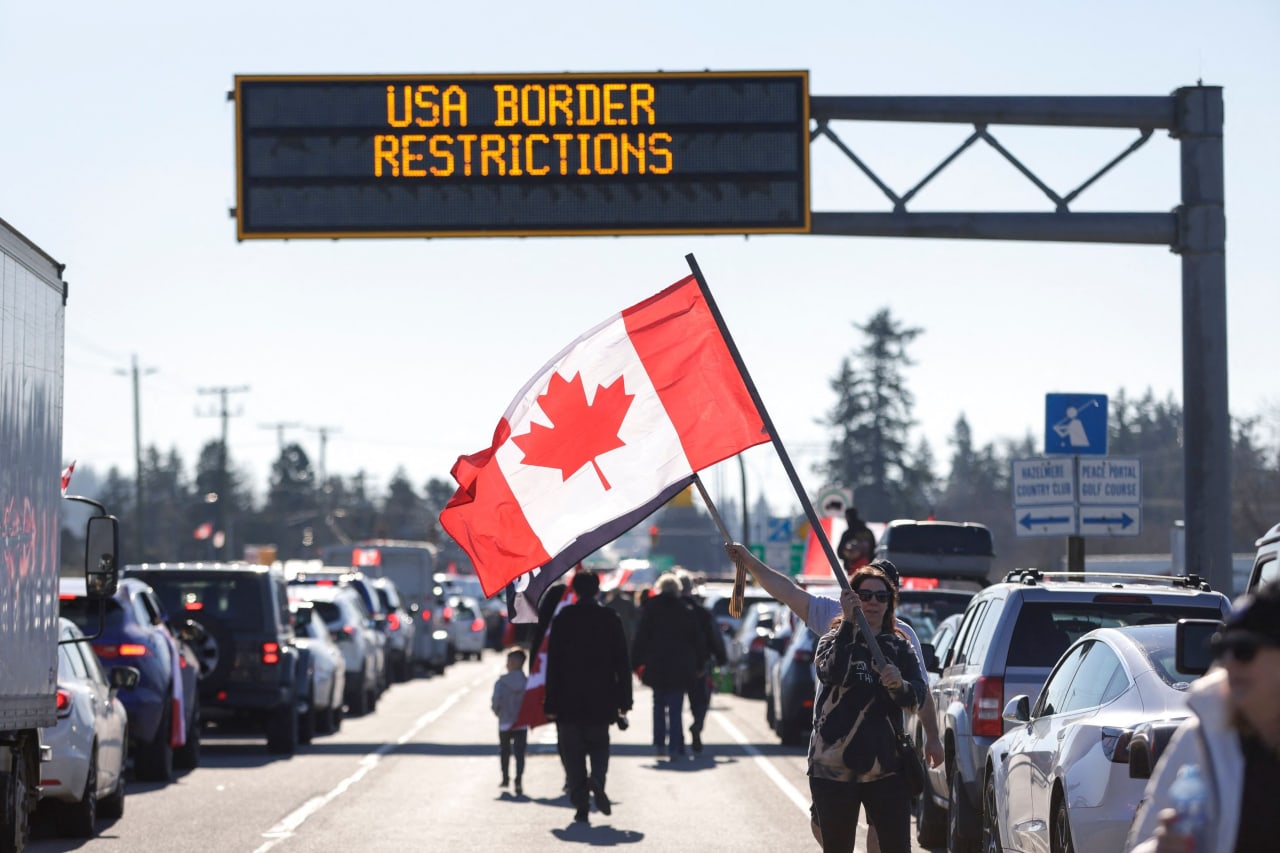
Photo credit: the Wall Street
Canada will scrap a border entry program next year that made it easy for thousands of people annually, predominantly Americans, to travel into remote areas of Ontario and Manitoba without having to report to a customs check post.
National :Post reports that by next September, those people will have to trek to one of those border stations or use one of the yet-to-be-established designated telephone reporting sites when entering Canada.
Through the Remote Area Border Program (RABC) set up to end next September, the Canada Border Service agency issued annual permits allowing pre-approved Canadian and US residents to freely cross the border in five remote and sparsely populated areas.
In Ontario, starting for the east, those areas include Cockburn Island and the Sault Ste. Marie’s upper lock system on the border with Michigan, waterways from Pigeon River all the way to the Lake of the Woods, and the entirety of the Canadian shores on Lake Superior. Also affected is Minnesota’s Northwest Angle arewa bordering southern Manitoba, which is only accessible by water or by road by driving through about 40 miles of the Canadian province.
The program “historically” attracts about 11,000 members annually, according to CBSA, 90 percent of whom are Americans.
As reported by Fly Echo in Minnesota, permit holders largely consist of paddlers, fishing guides on both sides of the border and their guests, and US residents who own property in Canada.
The agency said introducing telephone reporting in place of RABC improves border security and “builds o processes already in place across Canada, where tralkers are required to report to the CBSA from designated areas sites every time they enter Canada.
“This process ensures a consistent level of security and expectations of compliance for everyone,” it stated in a press release.
According to the CBSA, at the site, only the person operating the vehicle can exit to report upon arrival, at which time they can use a phone on site on their own device to contact the telephone reporting centre. Not unlike any border crossing, they must then supply all the necessary information for themselves and all passengers – identification, length of stay, reason for travelling, any required declarations, and so on.
Some US politicians have expressed concern about the impending change.
Minnesota Congressman Peter Stauber, in a letter sent to Canadian Public Safety Minister Gary Anandasa ngaree, outgoing Canadian Ambassador to the US Kirsten Hillman, and CBSA President Erin O’Gorman, said he and his peers were disappointed with the end of RABC, but encouraged by the promise of expanded telephone reporting.
However, the letter was not without reproach.
Co-signed by fellow RepublicansnJack Bergman and Kevin Cramer, it reads, “Unfortunately, the nearly two-year review of the RABC program has been marred by uncertainty and retracted statements.
“During this time, the Canadian government has been unable to respond to general questions permit holders have posed.”