Photo credit: Yahoo News
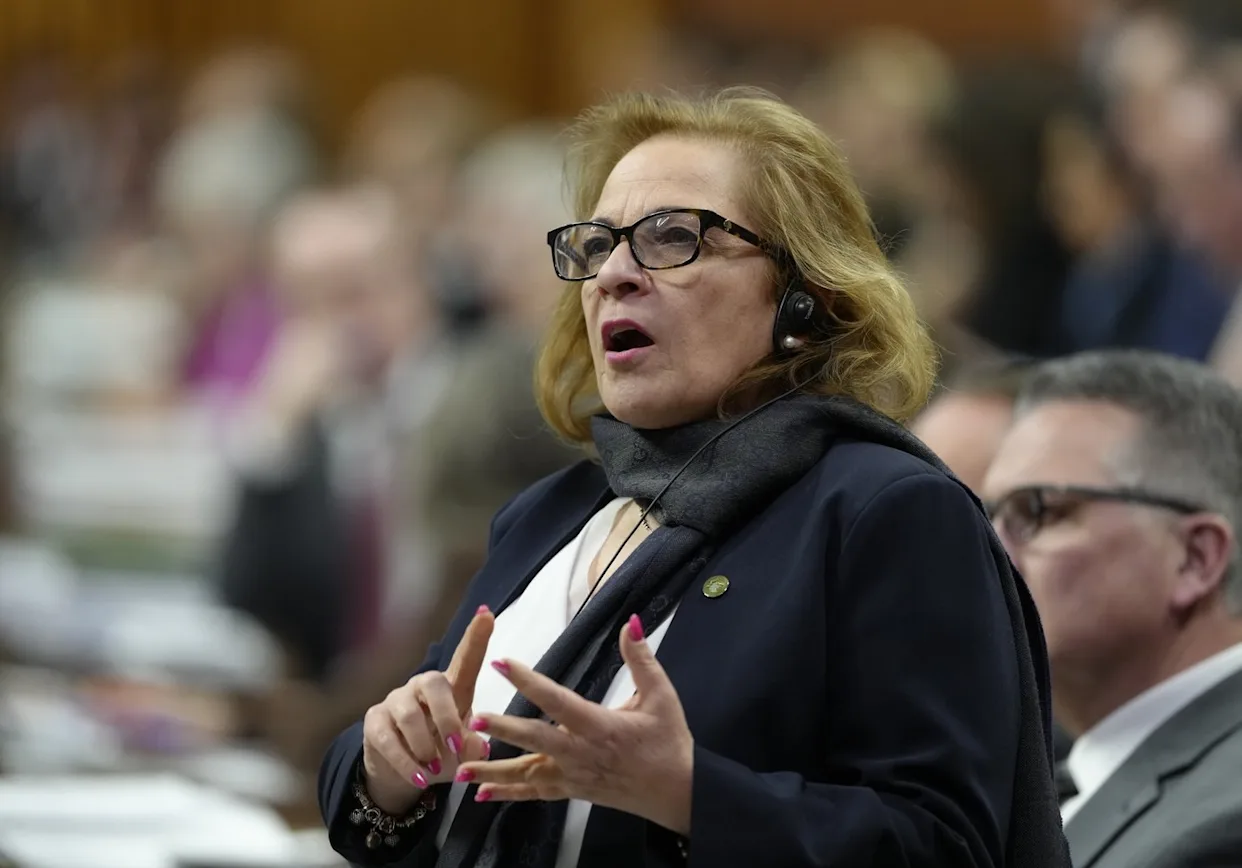
Canada’s Immigration Minister Lena Diab has said the changes to the refugee status claim process proposed in the government’s border and immigration bill are “better for the applicants,” even as multiple organizations attack the plans.
The Canadian Press reports that the bill proposes to bar people that came to Canada more than a year ago from filing refugee claims with the Immigrant and Refugee Board, Canada’s main asylum review body.
Th4 legislation would require anyone in that category to apply for a pre-removal risk assessment, or PRRA, which is normally an appeal measure for rejected asylum claims.
However, both the Canadian Bar Association and Amnesty International argue the legislation would set up a two-tier asylum system that wouldn’t guarantee in-person hearings for vulnerable people, such as members of the LGBTQ+ community and survivors of domestic violence.
Diab told the Senate social affairs committee Thursday that if it’s clear an individual needs protection, the pre-removal risk assessment will approve the asylum claim “right away.”
“The pre-removal risk assessment, the PRRA, has been there for decades. We will enhance it. It works,” Diab told the committee.
“There are situations where it’s clear on the face of the documents that people should be staying. So those we’ll put aside. They get a “yes” right away from the PRRA rather than having to go through other things.”
Diab added a PRRA hearing could be ordered in cases where her department needs more clarity on an application, but some applicants would be turned down before reaching that stage.
The minister said 37 per cent of asylum claims filed between June 3 and Oct. 31, 2025 would be disallowed under the legislation’s proposed ineligibility measure – about 19,000 out of 50,000 applications.
She was correcting a statement she gave to a separate committee on Monday, when she said 37 claims would be affected.
She corrected herself a second time Thursday when she said 17 per cent of last year’s asylum claims came from student visa holders. On Monday, she said the figure was 37 per cent.
Deanna Okun-Nachoff, an immigration lawyer representing the Canadian Bar Association, told the committee on Monday the risk of persecution an individual faces can change after more than a year in Canada.
She pointed to people who come out as LGBTQ+ while in Canada, children separated from abusive parents or people who come from countries that have become unsafe due to conflicts or humanitarian disasters.
The bill proposes the one year restriction on claims be made retroactive to June 24, 2020, when the department started collecting better data on the country of origin of people entering and exiting Canada.
Okun-Nachoff said the retroactive restriction creates two classes of refugee claimants.
“One with the right to an oral hearing that allows them to explain their circumstances before expert, independent decision making … The second will only be given a written application, the PRRA, adjudicated by IRCC employees without an automatic full hearing on the merits and with few of the essential procedure protections,” she said in her testimony.
Julia Sande, a human rights lawyer with Amnesty International, told Tuesday’s committee hearing that the Supreme Court ruled in 1985 that an oral hearing is required for refugee claimants.
Sande also argued that there are no guaranteed protections against removal for individuals who appeal a PRRA decision to the Federal Court.
When Diab was asked about the possibility of refugee claimants’ rights being violated without a guaranteed hearing, she punted the question to Joanie Roy-Caswell, senor legal counsel for Immigration, Refugees and Citizenship Canada.
Roy-Caswell said the Supreme Court did not rule that all refugee cases require am oral hearing – just the ones where “a credibility issue is at stake.”
Immigration officials told the Senate committee the current refugee claim backlog runs to about 100,000 applications, and if 80,000 decisions are issued annually, it creates a roughly three-year wait time.
Jason Hollmann, the department’s director general for asylum policy, told the committee on Thursday the one year limit is meant to prevent “future surges” and misuse of the asylum system as a last-ditch way to stay in the country.
Opponents have criticized this power as being overly broad. The government has defended it by saying its use of this power would have to be approved by cabinet with specific reasoning published in the Canada Gazette.
When senators asked how the use of this power would not threaten a permanent resident’s status in Canada, Diab said, “When you come into the country, you get a landed immigrant status. That is not what this bill deals with, so the status we cannot change unless you become inadmissible and do something illegal. So that is the difference and I really needed to get a lesson as well.”