


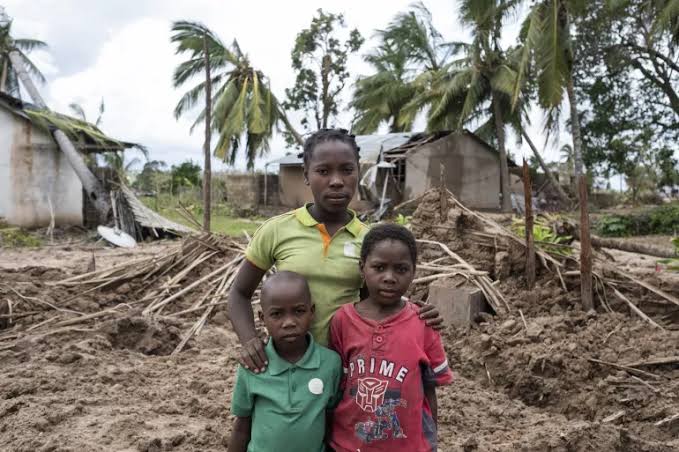
Photo credit: UNICEF
The UN-led system, for obvious reasons, has cut the number oof people it aims to reach this year by a third.
The New Humanitarian reports aid groups as saying tens of millions who need emergency relief will go without. This deprioritisation also means a shrinking international presence for the system itself.
Jeremy Wellard. head of coordination at the International Council of Voluntary Agencies (ICVA), a network of humanitarian NGOs, says eight countries are currently in accelerated transitions, they include, Cameroon, Eritrea, Iraq, Libya, Nigeria, Pakistan, and Zimbabwe.
Mozambique is not in an accelerated transition but is typical of dozens of other crisis-affected countries where humanitarian operations are still being significantly scale back in a process dubbed “deprioritisation” in UN jargon.
In Mozambique, multiple crises are worsening all at once.
Compounding and economic collapse and an outbreak of mpox virus are severe environmental and climate impacts from tropical storms and major drought. However, the major concern is the long-running conflict in Cabo Delgado, where groups, including Islamic State Mozambique, are attacking settlements and causing widespread displacement. Around 57,000 people, more than half of them children, have been forced to flee fighting in July. They are part of the 95,000 people who have been displaced since the start of the year.
Local aid workers say they were excluded from the discussions around how the reforms would affect their work and thrown into confusion by the flip-flopping policy changes that followed.
Despite some confusion among aid workers in the country who weren’t at all sure United Nations Office for the Coordination of Humanitarian Affairs (OCHA) confirmed to the New Humanitarian that Mozambique is no longer facing an “accelerated transition”. Its humanitarian response plan ((HRP), however, has been slashed.
The HRP made prior to the cuts and published in December 2024 correctly predicted that 2025 would be a difficult year in Mozambique: It requested $352 million to help 1.1 million people of the 4.8 million people in need of humanitarian assistance.
After the aid cuts, a “reprioritised” HRP published in March asked for $126 million to target just 317,000 people across a much more limited geographical area. The turnaround puzzled humanitarians who could clearly see the escalating crisis in Cabo Delgado.
This year’s humanitarian plan for Mozambique has received only $70.4 million, just 20% of what was originally needed.
Already, “the cuts are causing a big impact,” said Ulrika Blom, Mozambique c country director at the Norwegian Council. She warned that the situation could get worse, with few resources for essential planning for 2026.
But thankfully, the UN has now backtracked in Mozambique.
Mozambique’s case has been reviewed, and “for the moment, it’s not being considered for accelerated transition,” an OCHA spokesperson said.
Mozambique may have avoided accelerated transition for now, but the humanitarian outlook remains bleak, with displacement and gender-based violence in particular on the rise.
Solid article!