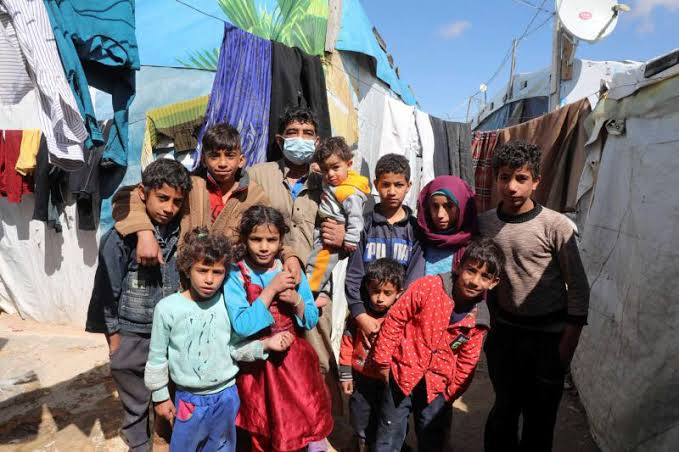
Photo credit: The Arab Weekly
With roughly 14 million Syrians displaced worldwide, including 6 million in neighbouring countries and Europe, the urgency for Syria to receive its displaced citizens is clear.
The National Interest reports that the emergence of Hay’at Tahrir al-Sham (HTS) governance, promising elections and minority protection, coupled with the elimination of certain US and EU sanctions, has bolstered claims that Syria is now safe for return.
However, the critical question remains: Is Syria ready for the repatriation of its displaced population?
Since the fall of the Assad regime, UNHCR data indicate that nearly 500,000 have returned from neighbouring countries. But despite HTS’s commitments, the returnees face persistent challenges: ongoing insecurity, sporadic violence, devastated infrastructure, and inadequate public services remain widespread. Economic instability and housing shortages further complicate reintegration efforts, casting doubt on the viability of large-scale returns.
Premature repatriation could trigger renewed displacement if conditions prove unstable.
Syria remains plagued by deep social divisions that continue to threaten stability and hinder the safe return of millions of displaced citizens. But the transitional government has made some progress, including the formation of a more inclusive cabinet with Kurdish and Christian representation. The promulgation of a religious fatwa to discourage revenge killings and the integration of Kurds into national institutions are also right steps.
But there is still more to do to create the conditions necessary for large-scale repatriation. Targeted attacks on minority communities still persist, fueled by their perceived association with the Assad regime. The bombing of Mar Eias Church in Damascus, which killed 25 people, also highlights a continued threat facing Christians. The recent Israeli strikes on Damascus, triggered by the Suwayda clashes between the Druze community and Syrian government forces, also underscore how escalating tensions have now drawn Israel into the fray.
Syria will be ready for repatriation only when clear and verifiable conditions are met. These include consistent security across return areas, functioning legal protection for minorities, community readiness to receive displaced populations without renewed tension, and sufficient infrastructure to support returnees. Until those conditions are met, repatriation must remain voluntary, gradual, and carefully monitored.